SIGN IN
 REGISTER


The Knowledge > How To Build Muscle >
Saturday, 31st October 2026
5 Signs Your Glutes and Hips Are Weak – And How to Fix Them
By LA Muscle on 31.10.2026 11:18 am


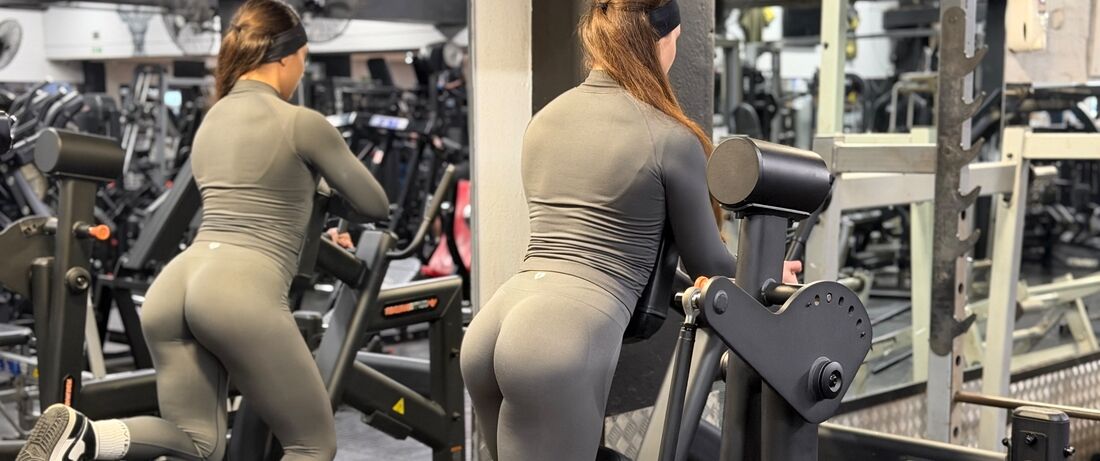
Strong glutes and hips are essential for building a powerful, athletic body. Yet these muscles are among the most neglected, particularly in people who spend long hours sitting, driving or working at a desk. Your glutes are not just responsible for the shape of your backside. They play a major role in stabilising your pelvis, supporting your lower back, maintaining good posture and generating power during walking, running, squatting and lifting weights. When your glutes and hip muscles are weak, other muscles often have to compensate. Over time, this can affect your movement, reduce your training performance and contribute to aches and discomfort. Here are five common signs that your glutes and hips need strengthening, along with the best exercises to address them.
1. You Experience Lower Back Pain or Tightness
One of the most common signs associated with weak glutes is persistent tightness or discomfort in the lower back, particularly after standing, walking or exercising. Your gluteus maximus is one of the largest and most powerful muscles in your body. It helps extend your hips and supports movements such as standing up, climbing stairs and lifting weights. When your glutes are not contributing effectively, your lower back muscles may take on additional work, particularly during exercises such as deadlifts and squats.
How to fix it: Start incorporating glute bridges into your routine. Lie on your back with your knees bent and feet flat on the floor. Push through your heels, squeeze your glutes and raise your hips until your body forms a straight line from your shoulders to your knees. Hold briefly before lowering. Perform 3 sets of 15 repetitions, concentrating on squeezing your glutes rather than arching your lower back.
2. Your Knees Collapse Inwards During Squats
If your knees tend to move inwards when squatting, lunging or landing from a jump, your hip stabilisers may not be doing their job effectively. The gluteus medius and gluteus minimus help control the position of your thighs and stabilise your pelvis. Weakness in these muscles can contribute to poor knee alignment, especially during demanding lower-body movements. Although knee movement is influenced by several factors, including ankle mobility and exercise technique, improving hip strength is an important part of developing better control.
How to fix it: Try lateral resistance band walks. Place a resistance band just above your knees or around your ankles, bend your knees slightly and take controlled sideways steps while maintaining tension in the band. Perform 3 sets of 12–15 steps in each direction. Keep your pelvis level and avoid allowing your knees to collapse inwards.
3. You Struggle to Balance on One Leg
Try standing on one leg for 30 seconds. Does your pelvis drop to one side? Do you wobble excessively or find yourself leaning your upper body to compensate? This can indicate weakness or poor control in your hip stabilisers, particularly the gluteus medius. Every time you walk or run, you briefly support your body weight on one leg. Your hip muscles work continuously to keep your pelvis stable during this movement. Poor single-leg stability can affect walking efficiency, running mechanics and performance in sports requiring rapid changes of direction.
How to fix it: Incorporate single-leg Romanian deadlifts into your training. Stand on one leg, maintain a slight bend in your supporting knee and hinge forwards at the hips while extending your other leg behind you. Keep your back neutral and return slowly to the starting position. Perform 3 sets of 10 repetitions on each leg. Begin without weights and gradually introduce dumbbells as your balance and strength improve.
4. Your Hip Flexors Feel Constantly Tight
If you spend much of your day sitting, you may notice tightness across the front of your hips when standing up or walking. Prolonged sitting keeps your hips in a flexed position. This can contribute to stiffness and reduced hip extension, particularly when combined with limited physical activity. Weak glutes can coexist with tight hip flexors, creating an imbalance that affects how comfortably and efficiently your hips move. You might notice this during running, lunges or when trying to stand completely upright after sitting for several hours.
How to fix it: Combine hip flexor stretching with exercises that strengthen your glutes. Start with a kneeling hip flexor stretch, gently tucking your pelvis underneath you and moving forwards until you feel a stretch at the front of your hip. Hold for 30 seconds on each side. Follow this with hip thrusts, using a bench to support your upper back. Drive your hips upwards while squeezing your glutes at the top. Perform 3 sets of 12 repetitions. As your strength improves, add resistance.
5. Your Legs Do All the Work During Lower-Body Exercises
Have you ever completed a demanding leg workout only to feel your quadriceps or hamstrings working intensely while your glutes seem to do very little? Although muscle soreness is not a reliable measure of workout effectiveness, consistently struggling to engage your glutes during exercises can indicate that your technique or muscle coordination needs improvement. Your glutes should contribute significantly to movements involving hip extension, including squats, deadlifts, step-ups and lunges. If your glutes are not contributing effectively, you may struggle to develop maximum lower-body strength and power.
How to fix it: Introduce controlled step-ups and Bulgarian split squats into your workouts. For step-ups, place one foot on a sturdy platform and push through that leg to raise your body. Avoid using excessive momentum from the trailing leg. For Bulgarian split squats, position your rear foot on a bench and lower your body by bending your front knee and hip. Drive through your front foot to return to standing. Perform 3 sets of 10–12 repetitions per leg, gradually increasing resistance as your strength improves.
The Ultimate Glute and Hip Strengthening Routine
You don't need to spend hours in the gym to build stronger glutes and hips. A focused routine performed two or three times per week can make a significant difference to your strength, stability and movement quality. Start with 3 sets of 15 glute bridges, followed by 3 sets of 12 lateral band walks in each direction, 3 sets of 10 single-leg Romanian deadlifts per leg, 3 sets of 12 hip thrusts and 3 sets of 10 Bulgarian split squats per leg. Rest for approximately 45–90 seconds between sets, or longer when using heavier weights. Start with manageable resistance, focus on controlled movements and progressively increase the challenge as you become stronger.
How Long Does It Take to Strengthen Weak Glutes?
With consistent training, many people begin noticing improvements in muscle control, balance and exercise performance within a few weeks. More substantial increases in strength and visible muscle development generally require several months of progressive resistance training. The key is consistency. Training your glutes once a fortnight is unlikely to produce the same results as a structured programme performed two or three times weekly. Adequate protein intake, sufficient recovery and gradually increasing resistance will also support muscle development.
Conclusion
Weak glutes and hips can affect far more than your appearance. They influence your posture, balance, athletic performance and ability to move efficiently. Lower back discomfort, poor knee control, difficulty balancing, tight hips and ineffective glute engagement can all be clues that your hip muscles need attention. However, none of these signs alone proves muscle weakness, and persistent pain deserves proper assessment. By strengthening your glutes and hip stabilisers through targeted resistance exercises, you can build a stronger foundation for your entire body. Strong glutes aren't just about looking good. They're about moving better, lifting stronger and maintaining an active, powerful body for years to come.




Possessed II
The STRONGEST Pre-Workout in the world. Insanity from day 1
Norateen Diamond
Build Muscle AND Lose Weight, Diamond Cuts