SIGN IN
 REGISTER


The Knowledge > Exclusive Articles >
Wednesday, 7th October 2026
The Peptide Gold Rush: Miracle Molecules or Overhyped Fad?
By LA Muscle on 07.10.2026 07:03 am


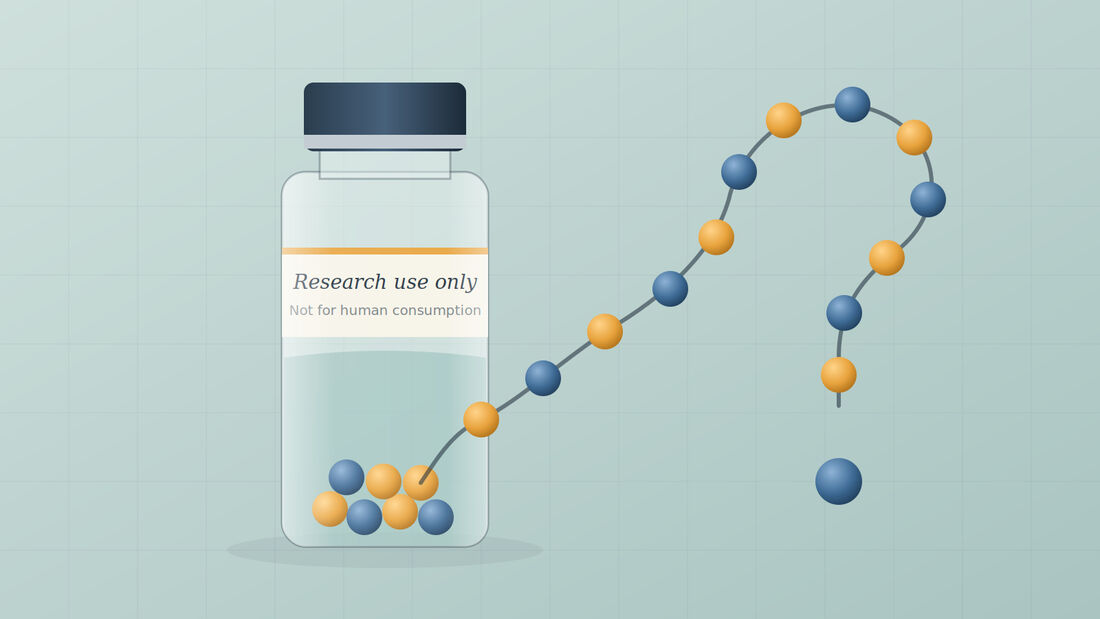
They promise faster healing, leaner muscle and younger skin. The science says: not so fast.
Walk into any serious gym right now and you'll hear the same three letters whispered between sets: BPC. Your mate who blew out his shoulder swears by it. A podcast host with a suspiciously good jawline injects something called TB-500 on camera. And your social feed is a steady drip of vials, syringes and "research purposes only" labels.
Welcome to the peptide gold rush. The pitch is seductive: tiny chains of amino acids that tell your body to heal, burn fat or build muscle, with none of the baggage of steroids. The reality is more awkward. Most of the peptides men are buying have never been properly tested in humans, are sold through a grey market with no quality control, and owe more of their popularity to marketing than to medicine.
That doesn't mean peptides are nonsense. Some of the most important drugs on the planet are peptides. It means the ones you're being sold on Instagram probably aren't those.
First, what actually is a peptide?
A peptide is a short chain of amino acids, the same building blocks that make up protein. String together roughly 50 or more and you've usually got a protein; fewer than that and it's a peptide. Your body makes thousands of them, and many work as signalling molecules: chemical messengers that bind to receptors and tell cells what to do.
That's the kernel of truth behind the hype. Peptides genuinely can be powerful medicine. Insulin is a peptide. So is oxytocin. And the biggest drug story of the decade, a new class of weight-loss and diabetes medicines, is built on peptides that mimic gut hormones regulating appetite and blood sugar.
Here's the crucial difference. Those drugs went through years of randomised controlled trials in tens of thousands of people before regulators approved them. They're made in licensed facilities, dosed precisely and prescribed by doctors who monitor side effects. The peptides trending in gyms have, in most cases, done none of that. Calling BPC-157 "a peptide like those weight-loss jabs" is a bit like calling a homemade firework "a rocket like the ones NASA uses".
The usual suspects, and what the evidence actually says
BPC-157, the "Wolverine" peptide. The poster boy of the trend. It's a lab-made fragment based on a protein found in gastric juice, and it has a genuinely impressive CV in rats: faster tendon, ligament and muscle healing across dozens of studies. The problem is the species. A 2025 systematic review in sports medicine screened 544 papers and ended up with 36 relevant studies, of which 35 were in animals and just one involved humans: a small retrospective look at knee-pain patients with no control group. The authors' advice to athletes and clinicians was blunt: don't use it until better trials exist. Much of the animal work also comes from a single research group in Croatia, which is not how robust science is supposed to look.
TB-500. Marketed as the recovery partner to BPC-157, it's a synthetic fragment of thymosin beta-4, a protein involved in cell migration and repair. When the FDA reviewed it in July 2026, its scientists reported finding no studies that directly gave TB-500 to humans. None.
Growth hormone secretagogues (CJC-1295, ipamorelin and friends). These nudge your pituitary to release more growth hormone, and they do measurably raise GH and IGF-1. But here's the catch: even giving healthy adults actual growth hormone has been a letdown for performance. Reviews of those trials found it added lean mass, much of it water, without making people meaningfully stronger, while causing side effects like joint pain and fluid retention. If the real thing underwhelms, a cheaper way of nudging it is unlikely to transform your physique.
GHK-Cu. The copper peptide has the most defensible story, and only on your face: there's reasonable lab and small-trial evidence for topical use in skincare. Injecting it for "anti-ageing" is another matter entirely, with essentially no human data behind it.
See the pattern? Strong mechanistic stories, encouraging rodent data, and a gaping hole where the human trials should be.
Why "it works in rats" isn't good enough
Medicine has a graveyard full of compounds that cured rats and did nothing (or worse) in people. Rodents metabolise drugs differently, heal differently and are usually given doses scaled to body weight in ways nobody has validated for humans. That's why the drug pipeline runs from animals to small safety trials to large randomised controlled trials. Most trending peptides are stuck at stage one, with people skipping straight to self-injection.
The practical problems stack up fast:
- Nobody knows the dose. There is no validated human dosing for BPC-157 or TB-500. The "protocols" online are educated guesses passed between forums and influencers.
- Nobody knows the long-term risks. Several of these peptides are pitched as boosting blood-vessel growth and cell proliferation. That's great for a torn tendon in theory, and a legitimate question mark when it comes to any undiagnosed tumour.
- Nobody knows what's in the vial. Most products are sold as "research chemicals, not for human consumption", a label that exists precisely so no one has to guarantee purity, sterility or even identity. At the July 2026 FDA meeting, one of the agency's own officials questioned whether there is even agreement on what BPC-157 is, arguing that quality standards couldn't be set until it was better characterised.
- Injection carries its own risks. Home-mixed powders and reused needles invite infection and reactions at the injection site, whatever the peptide does or doesn't do.
And then there's the placebo problem. Tendon and joint injuries often improve on their own over weeks and months. If you start a peptide at your most injured and feel better six weeks later, the peptide will get the credit whether it earned it or not.
"But the FDA just backed them?" Not quite
If you've seen headlines this summer suggesting peptides got the regulatory nod, here's what actually happened. On 23 and 24 July 2026, an FDA advisory committee voted to recommend that six peptides, including BPC-157 and TB-500, be added to the list of substances US compounding pharmacies can use. The BPC-157 vote was 8–6, with one abstention, and it was assessed for ulcerative colitis, not gym injuries.
Three things the peptide sellers tend to leave out:
- It isn't approval. The vote is non-binding, and inclusion on that list would still not make any of these an approved drug. Formal changes usually require rulemaking, which historically takes a long time. As of this writing, the FDA has not finalised it.
- The FDA's own scientists disagreed. Agency reviewers recommended against adding the peptides, citing safety and efficacy concerns and a lack of evidence that BPC-157 even works for the condition under review.
- The panel itself was controversial. In June, eight new members were added to the committee, and several outlets reported that many had ties to prescribing or promoting peptides. The push has the vocal backing of US Health Secretary Robert F. Kennedy Jr., who has called himself a big fan of peptides.
In the UK, none of the trending peptides is a licensed medicine, which is why they're sold as research chemicals. And if you compete in any tested sport, take note: BPC-157 and TB-500 are on the World Anti-Doping Agency's prohibited list at all times, as are growth hormone releasers.
Why is everyone on them?
Part of it is the weight-loss jab halo. The new appetite-suppressing medicines proved that a peptide injection can change bodies dramatically, and that success has been borrowed, wholesale, by compounds with none of the same evidence. "Peptide" now sounds like science, even when the product is a vial of unverified powder.
Part of it is the economics. Peptides are cheap to make, easy to ship and sit in a legal grey zone that lets sellers dodge medical claims while influencers make them for free, often with an affiliate code attached. Even a small Canadian company was quick to cheer the July FDA vote, noting it had just received a 20,000-unit production run of its own BPC-157 patch.
And part of it is psychology. Biohacking culture rewards the guy doing something no one else is doing. An injection feels more serious, more potent, than "sleep eight hours and do your physio". Glowing testimonials spread faster than null results, and nobody posts a video about the peptide that didn't work.
None of this proves peptides are useless. It explains why their popularity has raced far ahead of the proof.
So what is the deal?
Peptides as a class are real medicine. The peptides trending in your gym are, for now, mostly a fad: promising in petri dishes and rats, unproven in people, and sold through a market that can't promise you what's in the vial. The science may catch up. A handful of proper human trials are finally being planned, and if BPC-157 turns out to heal tendons, brilliant. But that's a bet you'd be placing with your own body, ahead of the data.
If you want faster recovery and a better body, the boring stuff still has the trials behind it:
- Progressive loading and proper rehab. Structured physio and eccentric loading have strong evidence for tendon injuries.
- Sleep. It's when growth hormone actually peaks, for free.
- Enough protein. Around 1.6g per kg of bodyweight a day is the well-supported target for building muscle.
- Creatine. Probably the most researched supplement on the planet, cheap and safe for most men.
- Patience. Most soft-tissue injuries heal on a timeline that no injection has been shown to shortcut.
And if you're already using peptides, tell your GP. Seek help promptly for any spreading redness, swelling, fever or breathlessness after an injection. You don't need to be judged, but you do need someone who knows what's going into your body.
- FDA advisory committee backs two controversial peptides, Regulatory Focus (RAPS), 23 July 2026
- FDA advisory committee votes to add popular peptide BPC-157 to drug compounding list, ABC News, 23 July 2026
- What the July 2026 FDA peptide panel vote means
- FDA voted yes on six peptides: now what?, Buchanan Ingersoll & Rooney
- BPC-157 clinical trials: complete research database
- Systematic review of BPC-157 in orthopedic sports medicine, AAOS 2025
- BPC-157 and TB-500: what the FDA peptide vote changed








Burn Belly Fat
Fast-action natural fat burner for men & women
Explosive Creatine
"300% stronger than regular Creatine" Muscle & Fitness Magazine