SIGN IN
 REGISTER


The Knowledge > How To Build Muscle >
Wednesday, 11th November 2026
Build a great physique at home
WIth your body and 1 kettlebell
By LA Muscle on 11.11.2026 08:08 am


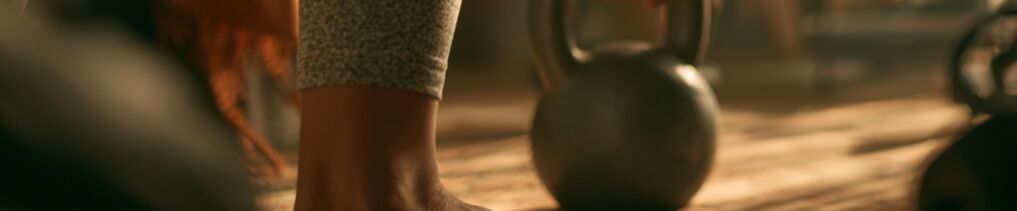
Forget expensive gym memberships, complicated training machines and rooms full of equipment. Building an impressive, muscular and ripped physique doesn't necessarily require a gym. With nothing more than your own bodyweight, a single kettlebell and the determination to train consistently, you can develop broad shoulders, a powerful chest, muscular arms, strong legs and a defined six-pack. In fact, some of the most effective muscle-building exercises ever developed require little or no equipment. Push-ups, squats, lunges and explosive movements have been used by athletes, soldiers and fitness enthusiasts for generations. Add a kettlebell to the equation and you suddenly have a remarkably versatile training system capable of developing strength, muscle mass, endurance and cardiovascular fitness. The secret isn't having access to hundreds of exercises. It's knowing how to combine a relatively small number of movements, progressively make them more challenging and train with enough intensity to force your body to adapt. Here's how to transform your physique without ever setting foot inside a gym.
Why Bodyweight Training and Kettlebells Are Such a Powerful Combination
Bodyweight training develops strength by forcing your muscles to move and control your own mass. Exercises such as push-ups, squats, lunges and planks recruit multiple muscle groups simultaneously, improving strength, coordination, stability and muscular endurance. Kettlebells complement this perfectly. Their unique design allows you to perform traditional strength movements alongside dynamic exercises that challenge your entire body. A kettlebell swing, for example, works the glutes, hamstrings, core and back while also placing considerable demands on your cardiovascular system. Together, these two training methods provide several important advantages. You can build muscle through progressive resistance, improve muscular definition, increase strength, develop explosive power and burn substantial amounts of energy during demanding workouts. You can also train virtually anywhere, eliminating travelling time and making consistency much easier. There is one important consideration, however. Building significant muscle requires progressively challenging your muscles. If an exercise becomes too easy, you must increase its difficulty by adding repetitions, slowing the movement, changing the leverage, increasing the range of motion or progressing to a harder variation. A single kettlebell can take you surprisingly far, but as you become stronger, certain exercises will eventually require more resistance for optimal muscle growth.
1. Build a Powerful Chest With Push-Ups
Push-ups are among the best bodyweight exercises for developing the chest, shoulders and triceps. When performed correctly and taken sufficiently close to muscular failure, they can stimulate impressive muscle growth. The standard push-up should form the foundation of your chest training. Keep your body straight, lower your chest towards the floor and push upwards without allowing your hips to sag. Avoid rushing repetitions. Controlled movements maintain tension on the working muscles and help you get more from every set. Once standard push-ups become relatively easy, introduce more demanding variations. Wide-grip push-ups can change the emphasis on the chest, while close-grip push-ups place greater demands on the triceps. Decline push-ups, performed with your feet elevated on a sturdy surface, increase the challenge to the upper chest and shoulders. For advanced trainees, archer push-ups and one-arm push-up progressions provide considerably greater resistance.
Recommended chest workout:
Standard push-ups: 4 sets of 12–25 repetitions
Decline push-ups: 3 sets of 10–15 repetitions
Close-grip push-ups: 3 sets of 8–15 repetitions
Slow-tempo push-ups: 2 sets close to muscular failure
For maximum muscle-building benefits, aim to finish most working sets with approximately one to three good repetitions remaining before failure.
2. Develop Broad, Muscular Shoulders With One Kettlebell
Well-developed shoulders are one of the defining characteristics of an impressive physique. Broad deltoids create the appearance of a wider upper body and contribute enormously to the coveted V-shaped silhouette. The single-arm kettlebell overhead press is an excellent starting point. Stand upright, hold the kettlebell at shoulder height and press it overhead while keeping your core braced. Lower it under control and repeat. Because you are pressing with one arm at a time, your abdominal and stabilising muscles must work hard to prevent your torso from leaning. Pike push-ups provide another powerful shoulder-building movement. Begin in an inverted V position with your hips raised and lower your head towards the floor. This shifts more of your bodyweight onto the shoulders, creating a challenging pressing exercise. Advanced trainees can progress towards wall-supported handstand push-ups, provided they have developed the necessary shoulder strength and control.
Recommended shoulder workout:
Single-arm kettlebell overhead press: 4 sets of 8–12 repetitions per arm
Pike push-ups: 3 sets of 8–15 repetitions
Single-arm kettlebell upright row, if comfortable for your shoulders: 3 sets of 10–12 repetitions
Wall-supported handstand hold: 3 sets of 20–40 seconds
The key is to train the shoulders through a variety of movement patterns rather than relying on pressing alone.
3. Build Bigger Arms Without Dumbbells
Many people assume that developing impressive biceps and triceps requires a rack of dumbbells. In reality, bodyweight training and kettlebells can provide substantial stimulation for both muscle groups. For the biceps, single-arm kettlebell curls are an obvious choice. Keep your elbow close to your body, curl the weight upwards and lower slowly. Avoid swinging your torso to generate momentum. Hammer-style curls, performed by gripping the kettlebell appropriately, can also challenge the brachialis and brachioradialis muscles, contributing to thicker-looking arms. For the triceps, close-grip push-ups and diamond push-ups are extremely effective. Overhead kettlebell triceps extensions provide an additional exercise that challenges the long head of the triceps. Remember that the triceps account for a substantial proportion of upper-arm muscle mass. Developing them is essential if your goal is bigger arms.
Recommended arm workout:
Single-arm kettlebell curls: 3 sets of 10–15 repetitions per arm
Close-grip push-ups: 3 sets of 10–20 repetitions
Kettlebell hammer-style curls: 3 sets of 10–12 repetitions per arm
Kettlebell overhead triceps extensions: 3 sets of 10–15 repetitions
4. Build a Thick, Powerful Back
A muscular back is essential for creating a powerful physique. It provides width, thickness and the V-shaped appearance that makes the waist look narrower. One of the challenges of training with bodyweight alone is that the back generally requires pulling movements. Without a pull-up bar or suspension equipment, kettlebells become particularly valuable. The single-arm kettlebell row is your main exercise. Hinge forwards at the hips, support yourself with your free hand if necessary and pull the kettlebell towards your hip. Concentrate on driving your elbow backwards rather than simply lifting the weight with your arm. Kettlebell deadlifts and Romanian deadlifts strengthen the posterior chain, including the glutes, hamstrings and spinal erectors. Reverse snow angels and prone Y-T-W raises can provide additional work for the upper back and shoulder stabilisers.
Recommended back workout:
Single-arm kettlebell rows: 4 sets of 10–15 repetitions per arm
Kettlebell Romanian deadlifts: 4 sets of 12–15 repetitions
Reverse snow angels: 3 sets of 15–20 repetitions
Prone Y-T-W raises: 3 sets of 10–15 controlled repetitions
For truly exceptional back width, vertical pulling exercises such as pull-ups are particularly valuable. A single kettlebell can develop back strength and thickness, but it cannot fully reproduce the resistance profile of a pull-up or lat pulldown.
5. Build Muscular Legs and Powerful Glutes
Never neglect your legs. A truly impressive physique requires balanced development, and strong legs also support athletic performance, stability and overall physical capability. Bodyweight squats are a good starting point, but they eventually become too easy for serious muscle growth. This is where unilateral exercises and kettlebell resistance become invaluable. Goblet squats, performed while holding the kettlebell close to your chest, challenge the quadriceps, glutes and core. Bulgarian split squats are particularly demanding because they place much of your weight onto one leg, creating substantial muscular tension even without heavy equipment. Reverse lunges, single-leg Romanian deadlifts and kettlebell swings provide further opportunities to strengthen and develop the lower body.
Recommended leg workout:
Kettlebell goblet squats: 4 sets of 12–20 repetitions
Bulgarian split squats: 3 sets of 10–15 repetitions per leg
Kettlebell Romanian deadlifts: 3 sets of 12–15 repetitions
Reverse lunges: 3 sets of 12 repetitions per leg
Standing single-leg calf raises: 4 sets of 15–25 repetitions
If your kettlebell is relatively light, slow the lowering phase of each squat and lunge to three or four seconds. This increases the difficulty without requiring additional weight.
6. Develop Ripped Abs and a Strong Core
A muscular physique isn't complete without a strong, well-developed midsection. However, there are two separate requirements for visible abdominal muscles: developing the abdominal muscles themselves and reducing the body fat covering them. Bodyweight training offers numerous effective abdominal exercises. Reverse crunches, lying leg raises, hollow-body holds and planks challenge the core in different ways. The kettlebell adds further possibilities. Suitcase carries and marches force your abdominal muscles to resist sideways bending, while kettlebell dead bugs and controlled loaded movements challenge stability.
Recommended abdominal workout:
Reverse crunches: 3 sets of 15–20 repetitions
Lying leg raises: 3 sets of 10–15 repetitions
Plank: 3 sets of 45–60 seconds
Kettlebell suitcase march: 3 sets of 30–45 seconds per side
Hollow-body hold: 3 sets of 20–40 seconds
Training your abs two or three times per week is sufficient for most people, provided the exercises are challenging and progressively developed. Remember, hundreds of crunches will not selectively remove belly fat. Visible abs are primarily determined by abdominal muscle development and overall body fat levels.
7. Use Kettlebell Swings to Build Power and Improve Conditioning
If you could choose just one kettlebell exercise for whole-body conditioning, the kettlebell swing would be an excellent contender. This explosive movement primarily targets the glutes, hamstrings and hip extensors while requiring substantial core stability. Performed in repeated sets, it can also elevate heart rate and improve conditioning. The swing is not a squat or a front raise. It is a hip-hinge movement. Push your hips backwards, maintain a neutral spine and explosively extend your hips to propel the kettlebell forwards. Your arms should guide the kettlebell rather than actively lift it. Start with controlled sets of 10–15 repetitions, learning the technique before increasing speed or volume. A simple conditioning workout involves performing 15 swings, resting for 45 seconds and repeating for 8–10 rounds. This creates a demanding session that can be completed in approximately 10–15 minutes. However, kettlebell swings alone will not make you ripped. Fat loss ultimately depends on your overall energy balance, supported by consistent training and appropriate nutrition.
8. The Ultimate Weekly Home Muscle-Building Programme
The following programme combines bodyweight training and kettlebell exercises into a structured routine designed to develop muscle, strength and definition. It trains the major muscle groups at least twice per week while providing enough recovery time to support growth. You can complete most sessions in approximately 35–50 minutes. Warm up for five minutes before training, and rest for 60–120 seconds between most sets, or longer after particularly demanding exercises.
Monday – Upper Body: Chest, Shoulders and Triceps
Standard push-ups – 4 sets of 12–20 reps
Single-arm kettlebell overhead press – 3 sets of 8–12 reps per arm
Decline push-ups – 3 sets of 10–15 reps
Pike push-ups – 3 sets of 8–12 reps
Close-grip push-ups – 3 sets of 10–15 reps
Tuesday – Lower Body and Abs
Kettlebell goblet squats – 4 sets of 12–15 reps
Bulgarian split squats – 3 sets of 10–12 reps per leg
Kettlebell Romanian deadlifts – 3 sets of 12–15 reps
Standing calf raises – 3 sets of 20 reps
Reverse crunches – 3 sets of 15 reps
Plank – 3 sets of 45 seconds
Wednesday – Back, Biceps and Conditioning
Single-arm kettlebell rows – 4 sets of 10–15 reps per arm
Kettlebell deadlifts – 3 sets of 12 reps
Reverse snow angels – 3 sets of 15 reps
Single-arm kettlebell curls – 3 sets of 12 reps per arm
Kettlebell swings – 8 sets of 15 reps
Thursday – Active Recovery
Take a brisk 30–45-minute walk, perform gentle mobility exercises or enjoy a light stretching session. Recovery is essential because muscles adapt and grow between demanding training sessions, not simply during them.
Friday – Full-Body Muscle Building
Push-ups – 4 sets of 15–20 reps
Kettlebell goblet squats – 4 sets of 15 reps
Single-arm kettlebell rows – 4 sets of 12 reps per arm
Single-arm kettlebell overhead press – 3 sets of 10 reps per arm
Reverse lunges – 3 sets of 12 reps per leg
Kettlebell curls – 3 sets of 12 reps per arm
Saturday – Full-Body Conditioning and Abs
Perform the following circuit, resting for 60–90 seconds after each complete round. Start with three rounds and gradually progress to five.
Kettlebell swings – 15 reps
Push-ups – 15 reps
Bodyweight squats – 20 reps
Mountain climbers – 30 seconds
Reverse crunches – 15 reps
Kettlebell suitcase march – 30 seconds per side
This workout combines muscular endurance and cardiovascular conditioning. Adjust the repetitions to maintain good technique rather than sacrificing movement quality for speed.
Sunday – Complete Rest
Allow your muscles, joints and nervous system to recover. Light walking is perfectly acceptable, but avoid another demanding workout.
9. How to Keep Building Muscle When Your Kettlebell Starts Feeling Too Light
One of the biggest misconceptions about home training is that you cannot continue developing muscle without constantly purchasing heavier equipment. Although increasing external resistance is an effective method of progressive overload, it isn't the only option. You can continue challenging your muscles by manipulating several training variables. Increasing repetitions is one method. If you previously performed 12 push-ups and can now complete 20 with the same technique, you have improved your performance. For muscle growth, eventually progress to a harder variation rather than endlessly adding repetitions. Slowing down the movement is another effective strategy. Taking three or four seconds to lower yourself during a push-up or squat increases the time spent controlling the load and makes each repetition more demanding. Introducing pauses at the bottom of a squat or push-up eliminates momentum and increases the challenge. Training one limb at a time through single-leg squats, split squats and unilateral kettlebell exercises increases the relative resistance experienced by the working muscles. Increasing your range of motion, where appropriate and comfortable, can also improve the muscular stimulus. Finally, training closer to muscular failure ensures that your working sets are sufficiently challenging. A set that finishes when you could easily complete another ten repetitions is unlikely to provide the same growth stimulus as a challenging set performed close to failure. The objective is not simply to make workouts more exhausting. It is to increase the mechanical demands placed on the muscles while maintaining proper technique.
10. How Heavy Should Your One Kettlebell Be?
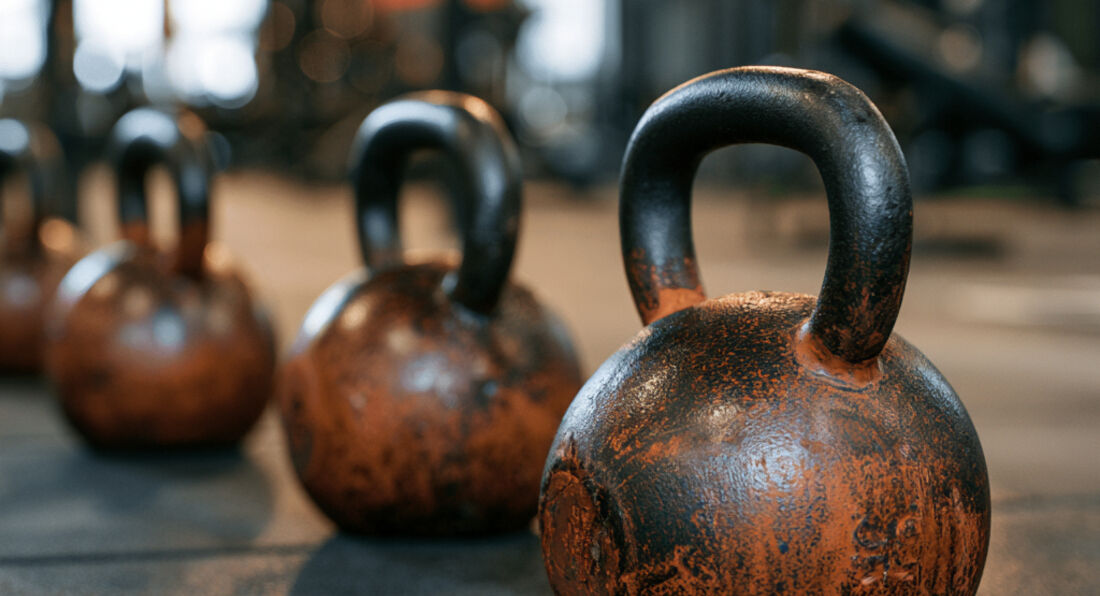
Choosing the correct kettlebell is important because you will be using the same weight for multiple exercises. A kettlebell that is ideal for shoulder presses may be relatively light for squats or deadlifts. Conversely, a weight suitable for heavy swings may be too demanding for controlled overhead movements. As a broad starting guide, many beginners use kettlebells weighing approximately 8–12 kg, while stronger or more experienced trainees may prefer 16–24 kg or heavier, depending on the exercises and their strength. The most important consideration is whether you can safely control the kettlebell during your weakest major exercise, often the overhead press. For example, if you can perform 8–12 controlled overhead presses with a 12 kg kettlebell, that may be a sensible starting weight. You can then make leg exercises more challenging by using unilateral variations, higher repetitions and slower tempos. An adjustable kettlebell would offer greater long-term versatility, but a single fixed-weight kettlebell is still enough to begin building an impressive physique.
11. Nutrition: The Difference Between Being Muscular and Looking Ripped
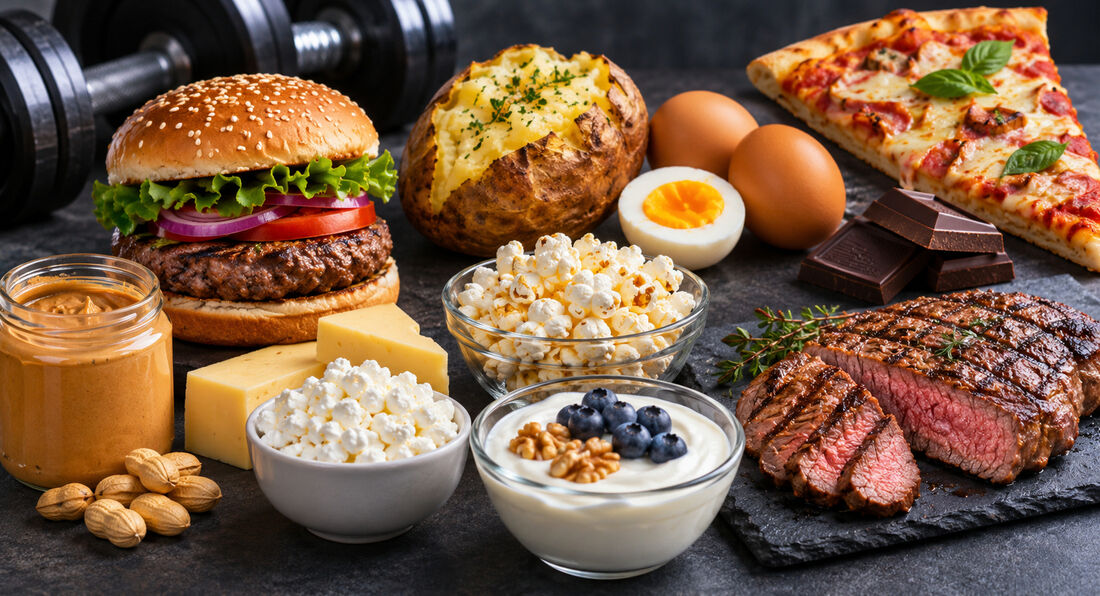
You can train extremely hard, but if your nutrition isn't aligned with your goal, achieving a lean, muscular appearance becomes considerably more difficult. Building muscle requires adequate energy, sufficient protein and consistent resistance training. Getting ripped requires reducing body fat while preserving as much muscle mass as possible. For most people, a daily protein intake of approximately 1.6–2.2 grams per kilogram of bodyweight provides a strong foundation for muscle development and retention. A person weighing 80 kg, for example, would aim for approximately 128–176 grams of protein daily. Excellent protein sources include chicken, fish, lean beef, eggs, Greek yoghurt, cottage cheese, tofu and quality protein supplements. Carbohydrates are equally important for supporting demanding workouts. Foods such as rice, potatoes, oats, fruit and wholegrain bread provide energy that helps you train harder and recover effectively. Healthy fats from olive oil, nuts, seeds, avocados and oily fish support overall health and normal physiological functions. If your primary goal is to lose body fat, aim for a moderate calorie deficit of approximately 300–500 calories per day. This generally provides a more sustainable approach than aggressive crash dieting. If you are already relatively lean and want to maximise muscle growth, a small calorie surplus may be more appropriate. For beginners or those returning to exercise after a long break, it is also possible to build muscle while reducing body fat, particularly when protein intake and training are well managed.
12. The Importance of Recovery, Sleep and Consistency
Muscle growth doesn't occur simply because you complete a difficult workout. Resistance training provides the stimulus, but recovery allows the body to adapt. Aim for approximately seven to nine hours of quality sleep per night. Inadequate sleep can impair training performance, recovery and appetite regulation. Avoid training the same muscle groups intensely every day. Most muscles benefit from approximately 48 hours of recovery between demanding sessions, although the exact requirement depends on training volume, intensity and individual recovery capacity. Consistency is equally important. Three or four productive workouts every week for six months will produce better long-term results than training intensely every day for two weeks before giving up. Track your progress by recording repetitions, sets, exercise variations and body measurements. Progress photographs taken under consistent lighting can also help you recognise changes that aren't always obvious in the mirror.
13. How Long Does It Take to Build a Muscular, Ripped Physique at Home?
The answer depends on your starting point, age, training history, genetics, nutrition and consistency. During the first four weeks, most beginners notice improvements in coordination, exercise technique, strength and muscular endurance. Some early visual changes may also become noticeable, particularly if body fat is decreasing. Between weeks five and eight, strength and repetition capacity typically improve further, while the muscles may begin to look fuller and more defined. By weeks nine to twelve, consistent trainees may notice more obvious changes in their chest, shoulders, arms and legs, especially when training is combined with appropriate nutrition. Between months four and six, more substantial improvements in muscle development and body composition become possible. After six to twelve months of structured training, many people can achieve a noticeably more athletic and muscular appearance. These are general expectations rather than guaranteed milestones. Someone who is already lean and muscular may progress more slowly than a beginner who has never trained before. Ultimately, developing an exceptional physique is a long-term process, and continued progress depends on progressively challenging the muscles rather than simply repeating the same workouts indefinitely.
14. The Five Biggest Mistakes People Make When Training at Home
Despite the effectiveness of bodyweight and kettlebell training, many people fail to achieve their potential because they make several common mistakes. The first is doing the same easy workout repeatedly. If you perform exactly the same repetitions with exactly the same difficulty every week, your muscles eventually have little reason to grow. Progressively increasing the challenge is essential. The second mistake is focusing entirely on high repetitions. Completing 100 easy squats might improve endurance, but it isn't necessarily the most effective way to develop bigger legs. More challenging squat variations and controlled sets performed close to failure are generally more productive. The third mistake is neglecting back and leg training. Push-ups and abdominal exercises are popular, but balanced muscular development requires serious attention to the posterior chain, back and lower body. The fourth mistake is trying to burn fat through abdominal exercises. Crunches and leg raises strengthen the abdominal muscles, but they do not specifically burn fat from the stomach. A calorie deficit and consistent training are required to reduce overall body fat. The fifth mistake is not eating enough protein or allowing adequate recovery. Muscles require sufficient nutrients and time to adapt. Training harder is not always the answer. Sometimes better nutrition, more sleep and smarter programming produce greater results.
15. The Ultimate 20-Minute Home Workout When You're Short of Time
One of the greatest advantages of bodyweight and kettlebell training is that you can complete an effective workout even when your schedule is extremely busy. A properly structured 20-minute session can challenge virtually every major muscle group while also providing a cardiovascular workout. The following routine combines compound movements with core exercises to deliver an efficient full-body session. Perform as many quality rounds as you can within 20 minutes, resting whenever necessary to maintain proper technique.
Kettlebell goblet squats – 15 repetitions
Push-ups – 12 repetitions
Single-arm kettlebell rows – 12 repetitions per arm
Kettlebell swings – 10 repetitions
Reverse lunges – 10 repetitions per leg
Plank – 30 seconds
This workout challenges the chest, shoulders, back, legs, glutes and core while also providing a cardiovascular stimulus. It won't replace a comprehensive muscle-building programme indefinitely, but it provides an excellent alternative when time is limited. The important thing is to maintain consistency rather than skipping workouts simply because you cannot dedicate an hour to training.
Your Body Is Your Gym
Building an incredible muscular and ripped physique doesn't require an expensive gym membership or a collection of sophisticated machines. Your own bodyweight provides a remarkably effective form of resistance, while a single kettlebell opens up a huge range of additional muscle-building possibilities. The real secret is consistency, progressive overload, intelligent exercise selection and nutrition that supports your goals. Push-ups can develop a powerful chest and triceps. Kettlebell presses can build strong shoulders. Rows can add thickness to your back. Squats and lunges can develop impressive legs, while abdominal training and proper nutrition can help reveal a defined midsection. There are limitations to training with only one fixed weight, particularly as you become stronger, but those limitations shouldn't prevent you from making substantial progress. You don't need the perfect gym, the latest equipment or two hours of training every day. You need a structured programme, a willingness to push yourself and the discipline to keep going. One kettlebell, your own bodyweight and a few square metres of floor space are enough to start building a physique you can be proud of.




Starman® PRO
Next level male sexual enhancement formula
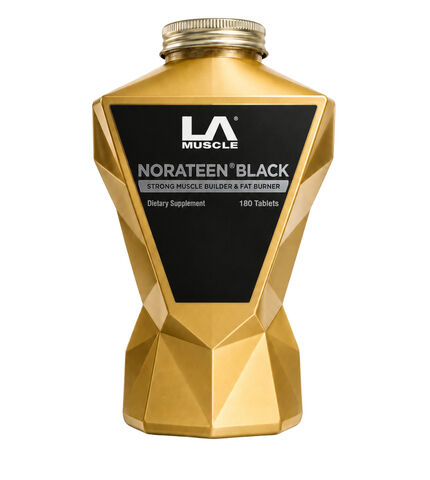
Norateen Black
World's First Norateen® Muscle Builder AND Fat Burner In One