SIGN IN
 REGISTER


The Knowledge > How To Build Muscle >
Wednesday, 4th November 2026
How to Get HUGE
The Ultimate Muscle-Building Workout for Serious Size
By LA Muscle on 04.11.2026 04:08 pm



If you want to build serious muscle mass, develop a powerful physique and get genuinely huge, you need more than simply lifting heavy weights. You need the right exercises, the right training intensity, progressive overload, proper nutrition and a programme designed to force your muscles to adapt and grow.
Building an impressive physique is not about spending endless hours in the gym or performing dozens of random exercises. The biggest and strongest natural bodybuilders understand that muscle growth is driven by a combination of mechanical tension, sufficient training volume, progressive overload and adequate recovery. Get these factors right and you create the conditions for substantial muscular development. Get them wrong and you can spend years training without achieving the size you want.
The following guide explains exactly how muscle growth works, the most effective training principles and a complete five-day workout designed to help you develop maximum muscle mass.
The Science of Getting Huge: What Actually Makes Muscles Grow?
Muscle growth, scientifically known as hypertrophy, occurs when resistance training stimulates adaptations that increase the size of muscle fibres. When you lift weights, your muscles experience mechanical tension, particularly when performing challenging repetitions through a controlled range of motion. This activates cellular signalling pathways involved in muscle protein synthesis, the process through which the body builds new muscle proteins.
Over time, provided your training stimulus is sufficient and your nutrition and recovery are adequate, these adaptations lead to increases in muscle size. However, lifting weights alone does not guarantee substantial growth. Your muscles must be challenged progressively, and your body must have enough energy, protein and recovery time to adapt.
One of the most important discoveries in modern exercise science is that muscle growth can occur across a surprisingly wide range of repetitions. Both moderately heavy weights and lighter weights can stimulate hypertrophy when sets are performed sufficiently close to muscular failure. Nevertheless, moderate repetition ranges are often the most practical choice because they allow substantial mechanical tension without requiring extremely heavy loads or excessively long sets.
For most muscle-building exercises, approximately 6–15 repetitions per set provides an effective balance of resistance, fatigue and training efficiency. Higher repetitions can also be useful, particularly for isolation exercises such as lateral raises, leg extensions and cable flyes.
Progressive Overload: The Number One Rule for Building Bigger Muscles
If there is one principle that separates successful muscle-building programmes from ineffective ones, it is progressive overload. Your muscles adapt to the demands placed upon them, which means performing exactly the same exercises with the same weights and repetitions indefinitely will eventually limit progress.
Progressive overload involves gradually increasing the demands of your training as your strength and muscular capacity improve. This can be achieved by increasing the weight lifted, performing more repetitions with the same resistance, improving exercise technique or gradually increasing productive training volume.
For example, suppose you currently bench press 80kg for eight repetitions. Over several weeks, your goal might be to increase this to 80kg for ten repetitions before progressing to 82.5kg or 85kg. These small improvements accumulate over months and years, producing meaningful increases in muscular strength and size.
However, progressive overload does not mean increasing the weight at every workout regardless of technique. Adding weight while shortening your range of motion, bouncing repetitions or relying on momentum can reduce the effectiveness of an exercise and increase injury risk. The objective is to make the target muscles work harder over time while maintaining proper form.
How Many Sets Should You Perform to Get Huge?
Training volume is one of the most important variables influencing muscle growth. Research generally demonstrates that performing multiple challenging sets produces greater hypertrophy than performing only one set, although the benefits eventually diminish as volume increases.
For many lifters, approximately 10–20 challenging sets per muscle group per week is a useful working range. Beginners often make excellent progress with considerably less, while experienced lifters may require higher volumes for certain muscle groups.
The important factor is not simply how many sets you perform, but how many productive sets you can recover from. Performing 25 sets for chest every week will not necessarily produce better results than performing 12–15 well-executed sets. Excessive training volume can interfere with recovery, reduce performance and make progressive overload more difficult.
Training each major muscle group approximately twice per week is a practical way to distribute weekly volume, maintain exercise quality and provide repeated opportunities for growth.
The Ultimate Five-Day Muscle-Building Workout
This programme combines heavy compound movements with targeted isolation exercises to develop the chest, back, shoulders, arms and legs. It is designed primarily for intermediate and advanced lifters who already have experience with resistance training and can tolerate a relatively demanding workload.
The routine uses five training days and two recovery days, with an emphasis on progressive overload and balanced muscular development. Each exercise should be performed with controlled technique, and most working sets should finish when you have approximately one to three repetitions remaining before muscular failure.
Monday – Chest and Triceps: Build a Massive Upper Body
The first workout focuses on developing chest thickness, upper-chest fullness and triceps size. A well-developed chest requires pressing movements that allow substantial resistance, combined with isolation exercises that challenge the pectoral muscles through a controlled range of motion.
Barbell Bench Press
4 sets of 6–8 reps
Incline Dumbbell Press
3 sets of 8–10 reps
Cable Chest Flyes
3 sets of 10–15 reps
Weighted Dips
3 sets of 8–12 reps
Overhead Triceps Extensions
3 sets of 10–12 reps
The barbell bench press provides the foundation for this workout because it allows progressive loading and recruits the chest, anterior shoulders and triceps. Incline dumbbell presses place greater emphasis on the upper portion of the chest, helping create a fuller appearance. Cable flyes provide additional targeted chest work, while weighted dips and overhead triceps extensions challenge the pressing muscles and triceps. Focus on maintaining a controlled lowering phase and using a comfortable, effective range of motion rather than simply moving the heaviest weight possible.
Tuesday – Back and Biceps: Develop Width, Thickness and Powerful Arms
A huge physique requires a well-developed back. Wide latissimus dorsi muscles create the impressive V-shaped appearance associated with bodybuilding, while thick upper-back musculature contributes to overall size and strength. This workout combines vertical pulling, horizontal rowing and direct biceps training.
Weighted Pull-Ups
4 sets of 6–10 reps
Barbell Rows
3 sets of 8–10 reps
Lat Pulldowns
3 sets of 10–12 reps
Seated Cable Rows
3 sets of 10–12 reps
Barbell Biceps Curls
3 sets of 8–12 reps
Hammer Curls
3 sets of 10–12 reps
Pull-ups and lat pulldowns emphasise the lats and other pulling muscles, while barbell and cable rows develop back thickness. Direct biceps training provides additional stimulation for arm growth, with hammer curls also challenging the brachialis and brachioradialis. Avoid swinging the body excessively during curls or using momentum to complete repetitions. Controlled movements that keep tension on the target muscles are generally more productive than lifting unnecessarily heavy weights with poor technique.
Wednesday – Legs: Build Serious Lower-Body Mass
Anyone who wants to develop a truly impressive physique must train their legs seriously. The quadriceps, hamstrings and glutes contain some of the largest muscles in the body, and developing them requires challenging resistance exercises performed consistently.
Barbell Squats
4 sets of 6–8 reps
Romanian Deadlifts
3 sets of 8–10 reps
Leg Press
3 sets of 10–12 reps
Leg Curls
3 sets of 10–15 reps
Standing Calf Raises
4 sets of 12–15 reps
Squats provide a demanding stimulus for the quadriceps and glutes, while Romanian deadlifts emphasise the hamstrings and hip extensors. Leg presses allow additional quadriceps-focused training with substantial external resistance, while leg curls directly target the hamstrings. Calf raises complete the workout by challenging the lower-leg muscles. Use a controlled range of motion and avoid sacrificing technique simply to increase the weight. Leg training can be physically demanding, so adequate recovery and sensible progression are particularly important.
Thursday – Rest and Recovery: The Day Your Muscles Adapt
Rest days are not wasted days. They are an essential component of an effective muscle-building programme. Resistance training provides the stimulus for adaptation, but muscular recovery and growth occur between training sessions when the body has sufficient nutrients and rest.
During recovery, muscle protein synthesis contributes to repairing and remodelling muscle tissue. Adequate sleep, sufficient calories and consistent protein intake help support this process. Light walking, gentle mobility work and stretching are suitable activities, but avoid turning your recovery day into another demanding workout.
If your muscles remain excessively sore, your strength is declining or you feel persistently exhausted, these may be signs that your training workload exceeds your current recovery capacity. Adjusting volume and intensity can be more productive than continually pushing harder.
Friday – Shoulders and Arms: Build Width and Impressive Muscle Size
Broad shoulders and muscular arms contribute enormously to the appearance of a powerful physique. Well-developed lateral deltoids create greater shoulder width, while the triceps account for a substantial proportion of upper-arm muscle mass. This workout combines pressing movements with targeted isolation exercises to develop the shoulders, biceps and triceps.
Seated Dumbbell Shoulder Press
4 sets of 6–10 reps
Dumbbell Lateral Raises
4 sets of 12–15 reps
Reverse Pec Deck Flyes
3 sets of 12–15 reps
EZ-Bar Biceps Curls
3 sets of 8–12 reps
Incline Dumbbell Curls
3 sets of 10–12 reps
Cable Triceps Pushdowns
3 sets of 10–12 reps
Overhead Cable Triceps Extensions
3 sets of 10–12 reps
Shoulder presses develop the anterior deltoids and triceps, while lateral raises directly challenge the side deltoids responsible for shoulder width. Reverse pec deck flyes target the rear deltoids and upper-back muscles, helping create balanced shoulder development. The remaining exercises provide direct stimulation for the biceps and triceps. Maintain strict technique during isolation exercises and avoid allowing momentum to take over, particularly during lateral raises and curls.
Saturday – Full-Body Hypertrophy: Add More Muscle-Building Volume
The final training day provides additional stimulation for several major muscle groups, allowing you to increase weekly training frequency without repeating an entire heavy workout. The emphasis is on controlled repetitions, moderate loads and high-quality muscular contractions.
Incline Barbell Bench Press
3 sets of 8–10 reps
Chest-Supported Rows
3 sets of 8–12 reps
Hack Squats
3 sets of 10–12 reps
Seated Leg Curls
3 sets of 10–15 reps
Dumbbell Lateral Raises
3 sets of 12–15 reps
Standing Calf Raises
3 sets of 12–15 reps
This session increases the weekly training stimulus for the chest, back, legs and shoulders. Chest-supported rows reduce the demands placed on the lower back compared with unsupported rowing variations, while hack squats provide additional quadriceps training. The isolation exercises allow targeted muscular work without requiring extremely heavy loads. Because this workout follows several demanding sessions earlier in the week, pay close attention to recovery and reduce the number of sets if performance begins to deteriorate.
Sunday – Complete Rest
Sunday is dedicated to recovery. Avoid strenuous resistance training and concentrate on giving your muscles the opportunity to adapt to the previous week's workload. Eat sufficient protein, maintain adequate hydration and prioritise quality sleep. Light activity is acceptable, but there is no need to perform another intense session.
Remember that building substantial muscle mass requires consistency over months and years. Taking a recovery day does not slow your progress. It helps make sustained progress possible.
How Heavy Should You Lift for Maximum Muscle Growth?
One of the most common bodybuilding questions is whether heavy weights or lighter weights are better for building muscle. The answer is that both can be effective, provided the working sets are sufficiently challenging.
Heavy loads performed for approximately 3–6 repetitions are particularly effective for developing maximal strength, while moderate loads performed for approximately 6–15 repetitions provide a practical combination of mechanical tension and training volume. Lighter loads can also produce hypertrophy when sets are taken sufficiently close to failure, although very high-repetition sets may be uncomfortable and inefficient.
For most exercises in this programme, select a weight that allows you to complete the prescribed repetitions while finishing with approximately one to three repetitions in reserve. For example, if an exercise requires eight repetitions, the weight should be challenging enough that you could perform only another one to three technically sound repetitions before reaching failure.
As you become stronger, increase the resistance gradually while maintaining your technique. This approach allows you to accumulate productive training over time without relying on constant maximal-effort lifting.
Should You Train to Failure to Get Huge?
Training to muscular failure means continuing an exercise until you cannot complete another repetition with acceptable technique. Although training close to failure is important for maximising the effectiveness of many hypertrophy sets, reaching absolute failure on every set is not necessary.
In fact, constantly training to failure can create excessive fatigue, particularly during demanding compound exercises such as squats, deadlifts and bench presses. This fatigue can reduce performance in subsequent sets and interfere with recovery.
A practical approach is to finish most compound exercises with one to three repetitions in reserve, while occasionally taking lower-risk isolation exercises closer to failure. This provides a strong training stimulus without creating unnecessary fatigue.
The objective is not to leave the gym completely exhausted. It is to provide enough muscular stimulation to produce growth and then recover sufficiently to repeat and improve your performance.
Nutrition: You Cannot Build Huge Muscles Without Enough Food
Training stimulates muscle growth, but nutrition provides the energy and raw materials needed to support it. If your goal is to gain substantial muscular size, eating enough calories and protein is essential.
A modest calorie surplus is generally the most effective starting point for maximising muscle gain while limiting unnecessary fat accumulation. For many people, consuming approximately 200–300 calories above maintenance requirements each day is a sensible approach, although individual needs vary according to body size, activity level and training experience.
Protein is particularly important because it supplies the amino acids required for muscle protein synthesis. Research suggests that approximately 1.6g of protein per kilogram of body weight daily is sufficient for many resistance-trained individuals, with intakes of up to around 2.2g per kilogram providing a practical margin for those seeking to maximise muscle development.
Carbohydrates also play an important role because they replenish muscle glycogen and support performance during demanding workouts. Foods such as rice, potatoes, oats, pasta and fruit provide useful energy for training. Dietary fats are equally important for overall health and normal hormonal function, with foods such as olive oil, nuts, eggs and oily fish contributing valuable nutrients.
A successful muscle-building diet should therefore include adequate protein, sufficient carbohydrates, healthy fats and a consistent calorie intake. Simply eating enormous quantities of food will not automatically produce greater muscle growth. Excessive calorie consumption primarily increases the risk of unnecessary body-fat gain.
How Important Is Sleep for Muscle Growth?
Sleep is one of the most overlooked factors in bodybuilding. During sleep, the body carries out numerous recovery processes that support muscular repair, normal hormonal function and physical performance.
Consistently inadequate sleep can impair training performance, reduce recovery quality and make it more difficult to maintain the demanding training schedule required for substantial muscle development.
Most adults should aim for approximately seven to nine hours of quality sleep each night. Maintaining consistent sleep and waking times, avoiding excessive caffeine late in the day and creating a comfortable sleeping environment can help improve sleep quality.
If you are training hard but constantly feel exhausted, struggle to increase your weights or experience persistent muscular soreness, improving recovery may be more beneficial than adding extra exercises.
How Long Does It Take to Get Huge?
Building substantial muscle mass takes time, and realistic expectations are essential. Beginners can often gain muscle relatively quickly because their bodies are highly responsive to resistance training. As training experience increases, the rate of muscle growth generally slows.
Visible improvements in muscular size can occur within the first few months of consistent training, but developing a genuinely large, muscular physique usually requires years of progressive resistance training, appropriate nutrition and recovery.
Genetics, age, training history, body composition and individual recovery capacity all influence the rate of progress. Some people gain muscle more easily than others, but nearly everyone can improve their muscular development through a properly structured programme.
Rather than constantly changing exercises or searching for shortcuts, focus on measurable improvements in strength, training performance, body measurements and muscular development over time.
The Biggest Mistakes That Stop People Getting Huge
One of the biggest mistakes is changing workout programmes too frequently. Muscle growth requires progressive overload, and constantly replacing exercises makes it difficult to measure improvements. Another common mistake is performing too many exercises and sets without allowing adequate recovery. More training is not automatically better, particularly when fatigue begins to interfere with performance.
Poor exercise technique is another major problem. Using excessively heavy weights while shortening the range of motion or relying on momentum can reduce the quality of muscular stimulation. Equally, lifting weights that are too light without approaching muscular failure may fail to provide a sufficient stimulus for growth.
Inadequate nutrition is another common reason people struggle to gain size. If your body does not receive enough calories and protein, muscular development can be compromised. Finally, inconsistent training is perhaps the biggest obstacle of all. Performing an excellent workout programme for two weeks and then abandoning it will not produce the results that months of structured training can achieve.
Train Hard, Eat Properly and Get Huge
Developing a large, muscular physique requires a combination of intelligent training, progressive overload, sufficient nutrition and consistent recovery. There is no single magical exercise or secret repetition range that guarantees enormous muscles. The most effective approach is to perform challenging resistance training consistently, gradually increase your performance and provide your body with the resources needed to grow.
The five-day programme outlined above provides a comprehensive foundation for developing the chest, back, shoulders, arms and legs. By combining heavy compound exercises with targeted isolation movements, it allows you to challenge the major muscle groups while distributing training volume throughout the week.
Follow the programme consistently for at least 8–12 weeks, monitor your progress and adjust your training according to your recovery and performance. Over time, the accumulation of small improvements in strength, repetitions and training quality can produce substantial changes in muscle size.
If you want to get huge, stop looking for shortcuts. Train with purpose, lift progressively heavier weights, eat enough quality food, recover properly and remain consistent. Building serious muscle is a long-term process, but the results can be extraordinary.




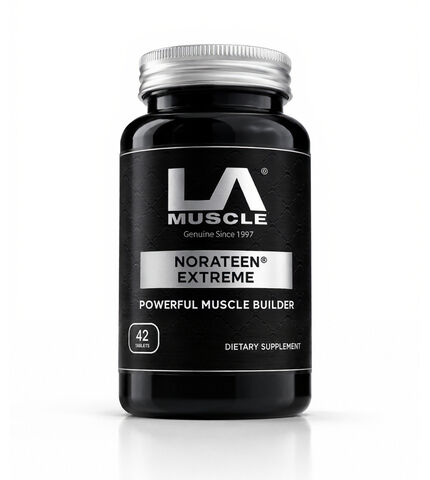
Norateen EXTREME
Extreme Testosterone & GH Booster for bodybuilders; gets you MASSIVE!

Fat Stripper Intense Gummy
Instant-acting appetite reduction and fat burning