SIGN IN
 REGISTER


The Knowledge > How To Build Muscle >
Friday, 6th November 2026
DEADLIFTS: The Ultimate Exercise for Building Serious Muscle, Strength and Power
By LA Muscle on 06.11.2026 11:18 am


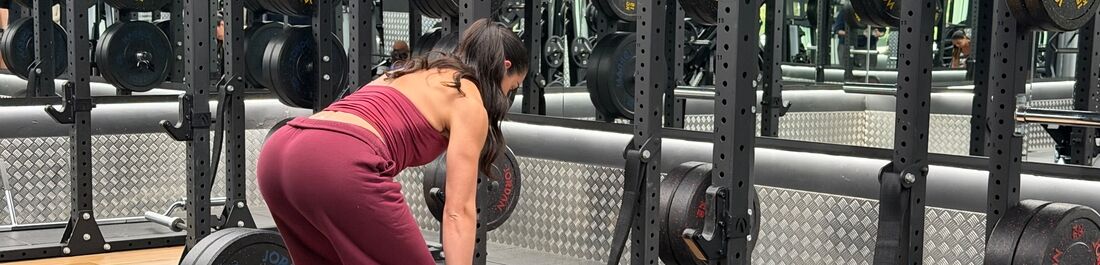
If there is one exercise that deserves a permanent place in your muscle-building routine, it is the deadlift. This powerful compound movement recruits some of the largest and strongest muscles in your body, builds impressive overall strength and helps develop the thick, muscular physique that serious bodybuilders strive for.
Deadlifts have long been regarded as one of the most effective exercises in strength training, and for good reason. Unlike isolation exercises that concentrate on one particular muscle, deadlifts force multiple muscle groups to work together to lift a heavy weight from the ground. The result is a demanding full-body movement that develops strength, muscular coordination and the ability to handle progressively heavier loads. Whether your goal is to build a bigger back, develop thicker legs, increase overall muscle mass or become stronger in the gym, deadlifts offer benefits that few other exercises can match.
1. Deadlifts Build Muscle Across Your Entire Body
One of the biggest advantages of deadlifts is the sheer number of muscles involved in every repetition. Although commonly classified as a back exercise, deadlifts are actually a full-body compound movement that places considerable demands on the posterior chain — the muscles running along the back of your body. Your glutes generate powerful hip extension, your hamstrings assist in controlling the movement, your quadriceps help drive the weight away from the floor, and your spinal erectors work to maintain a stable back position. Meanwhile, your trapezius muscles, upper back, abdominal muscles, forearms and grip are all heavily involved in stabilising and controlling the load. This extensive muscular recruitment makes deadlifts particularly valuable for people looking to build overall size and strength. Instead of training each muscle separately, you are challenging several major muscle groups simultaneously. For maximum muscle growth, however, deadlifts should complement rather than replace targeted exercises such as squats, rows, leg curls and hip thrusts.
2. Deadlifts Help You Develop a Thicker, More Muscular Back
A wide back looks impressive, but a thick, powerful back creates the dense, three-dimensional appearance associated with advanced muscular development. Deadlifts are particularly effective at developing the spinal erectors and strengthening the muscles responsible for maintaining a rigid torso under heavy loads. The trapezius and other upper-back muscles also work intensely to stabilise the shoulders and spine throughout the lift. Over time, progressively heavier deadlifts provide a substantial training stimulus to these muscles, contributing to greater muscular development and improved strength. While exercises such as pull-ups and lat pulldowns are important for building back width, deadlifts contribute to the thickness and structural strength that complete a well-developed back.
3. Deadlifts Build Bigger, Stronger Glutes and Legs
Deadlifts are not simply about lifting with your back. The hips and legs play an enormous role in generating the force required to move the barbell. The gluteus maximus is one of the primary muscles responsible for extending the hips as you stand upright. The hamstrings help control the hip hinge, while the quadriceps contribute significantly to the initial drive from the floor. This combination makes deadlifts valuable for developing lower-body strength and muscle mass, particularly when combined with other leg exercises. Different deadlift variations also allow you to shift the emphasis towards particular muscle groups. Romanian deadlifts, for example, place a greater emphasis on the hamstrings and glutes, making them especially useful for hypertrophy-focused training.
4. Deadlifts Allow You to Lift Heavy Weights and Progressively Overload Your Muscles
Progressive overload is one of the fundamental principles of muscle growth. Put simply, your muscles need a sufficient training stimulus that increases over time if they are to continue adapting. Deadlifts are particularly useful because they allow you to train with relatively heavy weights while engaging large amounts of muscle mass. As your technique improves and your strength increases, you can progressively add weight, perform more repetitions or increase the amount of quality work completed. This provides an ongoing stimulus for muscular adaptation. However, heavier weights are not automatically better. The objective is to increase the demands placed on your muscles without sacrificing technique or recovery. A controlled deadlift performed correctly is far more productive than an excessively heavy lift completed with poor form.
5. Deadlifts Develop Real-World Strength and Power
One of the most practical benefits of deadlifts is that they strengthen a movement pattern used throughout everyday life: lifting an object from the ground. The hip hinge, which forms the foundation of the deadlift, teaches you to generate force through your hips and legs while maintaining a stable torso. This movement pattern is important for many activities, including lifting heavy objects, carrying equipment and performing athletic movements that require powerful hip extension. Deadlifts also improve grip strength, trunk stability and coordination between the upper and lower body. For athletes, greater hip and lower-body strength can support improvements in performance when combined with appropriate sport-specific training.
6. Deadlifts Strengthen Your Core
Many people associate abdominal development with crunches, sit-ups and leg raises. However, your core has another essential function: stabilising your spine while your body produces or resists force. During a heavy deadlift, the abdominal muscles, obliques and deeper trunk stabilisers work together to maintain spinal position and resist unwanted movement. This creates a substantial isometric challenge for your core. Although deadlifts do not replace direct abdominal training, they are an excellent way to develop the strength and stability required for heavy compound movements. A stronger core also supports performance in exercises such as squats, overhead presses and bent-over rows.
7. Deadlifts Help Improve Your Overall Physique
The physical benefits of deadlifts extend beyond any single muscle group. A well-developed posterior chain contributes to a more balanced, powerful physique. Strong glutes, muscular hamstrings, thick spinal erectors and developed trapezius muscles all contribute to the appearance of overall muscularity. Deadlifts also encourage the development of strength throughout the body, helping you build the physical foundation required to perform other demanding exercises. For bodybuilders, this is particularly important because a balanced physique requires muscular development from every angle, not simply the chest, arms and shoulders.
8. Do Deadlifts Increase Testosterone and Growth Hormone?
Heavy compound exercises such as deadlifts can produce temporary increases in certain hormones, including testosterone and growth hormone. However, these short-term hormonal responses should not be confused with sustained increases in hormone levels or guaranteed additional muscle growth. Research suggests that the brief hormonal elevations following resistance exercise are not a major independent driver of hypertrophy. The real muscle-building benefits of deadlifts come from mechanical tension, progressive overload, muscular recruitment and the adaptations that occur when training is combined with adequate nutrition and recovery. In other words, deadlifts help build muscle because they provide a powerful resistance-training stimulus, not because they dramatically increase testosterone.
9. How to Perform a Deadlift Correctly
Correct technique is essential for getting the most from deadlifts while managing the risk of injury. Start by standing with your feet approximately hip-width apart and the barbell positioned over the middle of your feet. Bend at your hips and knees to grip the bar, keeping it close to your shins. Brace your abdominal muscles, maintain a controlled and stable spinal position, and engage your upper back before beginning the lift. Push through the floor with your feet while extending your knees and hips together. Keep the bar close to your body throughout the movement. At the top, stand tall with your hips fully extended, but avoid leaning backwards or excessively arching your lower back. Lower the weight by pushing your hips backwards and allowing your knees to bend as the bar approaches the floor. The entire movement should remain controlled, with your technique taking priority over the amount of weight lifted.
10. How Many Sets and Repetitions Are Best for Muscle Growth?
Although deadlifts are often associated with very heavy weights and low repetitions, they can also be incorporated into a muscle-building programme. The ideal approach depends on your experience, training objectives and ability to recover. Beginners should start with two to three sets of six to eight repetitions using a manageable weight that allows them to learn the movement properly. Intermediate lifters can perform three to four sets of five to eight repetitions, progressively increasing the load as their strength and technique improve. Advanced lifters can perform three to five sets of three to six repetitions when prioritising strength, or use moderate loads and appropriate variations for additional hypertrophy work. For Romanian deadlifts, three to four sets of eight to twelve repetitions can be particularly effective for targeting the hamstrings and glutes. Rest periods of approximately two to four minutes are generally appropriate for demanding working sets, with longer rests sometimes required for very heavy lifting. Most importantly, avoid taking every heavy deadlift set to complete muscular failure. Deadlifts generate considerable fatigue, and leaving one or two repetitions in reserve is often a more sustainable approach.
11. Which Type of Deadlift Is Best for Muscle Growth?
There are several deadlift variations, each offering slightly different benefits. The conventional deadlift is excellent for developing overall strength and challenging the glutes, quadriceps, spinal erectors and upper back. The Romanian deadlift emphasises the hip hinge and places substantial tension on the hamstrings and glutes, making it one of the most useful deadlift variations for lower-body hypertrophy. The sumo deadlift uses a wider stance and a more upright torso, changing the demands placed on the hips, knees and back, and can be particularly suitable for lifters whose proportions favour this position. The trap bar deadlift uses a hexagonal bar that allows the lifter to stand inside the weight rather than behind it. This variation often permits a more upright torso and can be an excellent option for developing lower-body strength. The stiff-leg deadlift is performed with relatively straight knees, increasing the demands of the hip hinge and strongly challenging the hamstrings. It requires good control and an appropriate range of motion. For overall strength, conventional and trap bar deadlifts are excellent choices. For specifically targeting hamstring and glute growth, Romanian deadlifts are often particularly effective.
12. How Often Should You Deadlift?
Deadlifts are demanding exercises, and performing them too frequently can interfere with recovery and the quality of your other workouts. For many lifters, one heavy deadlift session per week is sufficient, particularly when the programme already includes squats, rows and other lower-body exercises. A second weekly session using a lighter variation, such as Romanian deadlifts, can provide additional muscle-building work without requiring another maximal-effort workout. For example, you could perform conventional deadlifts early in the week and Romanian deadlifts three or four days later. The key is to balance training intensity, total weekly volume and recovery so that your performance continues to improve.
13. Nutrition Is Essential for Getting Bigger From Deadlifts
Even the most effective deadlift programme will produce limited muscle growth if your body does not receive the nutrition required to support recovery and adaptation. Protein is particularly important because it supplies the amino acids required for muscle protein synthesis. For most people undertaking regular resistance training, approximately 1.6–2.2 grams of protein per kilogram of body weight per day is a useful target. Carbohydrates help fuel demanding workouts and replenish muscle glycogen, while dietary fats support normal physiological functions. If your primary objective is to gain muscular size, a modest calorie surplus can make it easier to build muscle, although beginners and some other lifters can also gain muscle without one. Creatine monohydrate is another well-researched option. A daily intake of three to five grams supports improvements in high-intensity exercise performance and can contribute to greater gains in strength and lean mass when combined with resistance training. Adequate sleep and recovery are equally important. Muscles adapt between training sessions, not simply while you are lifting weights.
14. The Biggest Deadlift Mistakes That Limit Your Growth
One of the most common mistakes is using too much weight before mastering the movement. This often leads to poor positioning, reduced muscular control and unnecessary fatigue. Another mistake is allowing the barbell to drift too far away from the body. Keeping the bar close improves lifting efficiency and helps control the demands placed on the lower back. Some lifters also attempt to turn every deadlift workout into a personal-record session. Although testing strength occasionally has its place, consistent training with good technique is more productive for long-term muscle development. Finally, relying exclusively on deadlifts for back and leg development is a mistake. Deadlifts are an excellent exercise, but they do not provide every muscle with the full range of training stimulus needed for maximum growth. Combining them with squats, rows, pull-ups, leg presses, leg curls and other targeted exercises creates a more complete muscle-building programme.
Should Deadlifts Be Part of Your Muscle-Building Routine?
Absolutely. For anyone capable of performing them safely, deadlifts are one of the most valuable compound exercises available for developing total-body strength and muscularity. They challenge some of the largest muscle groups in the body, strengthen the posterior chain, develop grip and core strength, and provide an excellent opportunity for progressive overload. However, conventional deadlifts are not compulsory for building an impressive physique. Some lifters will achieve better results from Romanian deadlifts, trap bar deadlifts or other exercises that suit their individual biomechanics, injury history and recovery capacity. The secret to getting bigger is not simply lifting the heaviest weight possible. It is applying consistent muscular tension, progressing intelligently, eating correctly and recovering sufficiently. Make deadlifts or an appropriate deadlift variation part of a balanced training programme, concentrate on progressive improvement, and you will be building the strength and muscular foundation needed for serious long-term growth.




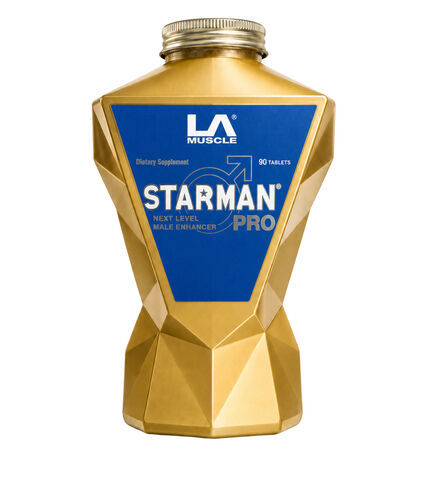
Starman® PRO
Next level male sexual enhancement formula
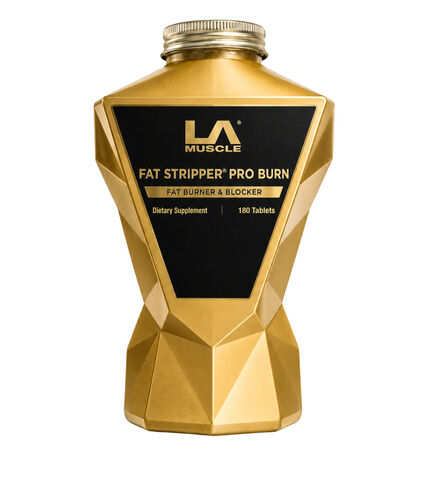
Fat Stripper PRO BURN
Professional Pharma Grade Fat Burner and Blocker