SIGN IN
 REGISTER


The Knowledge > How To Build Muscle >
Monday, 14th September 2026
How to Build a Massive, Proportional Body Like "Reacher"
By LA Muscle on 14.09.2026 07:21 am


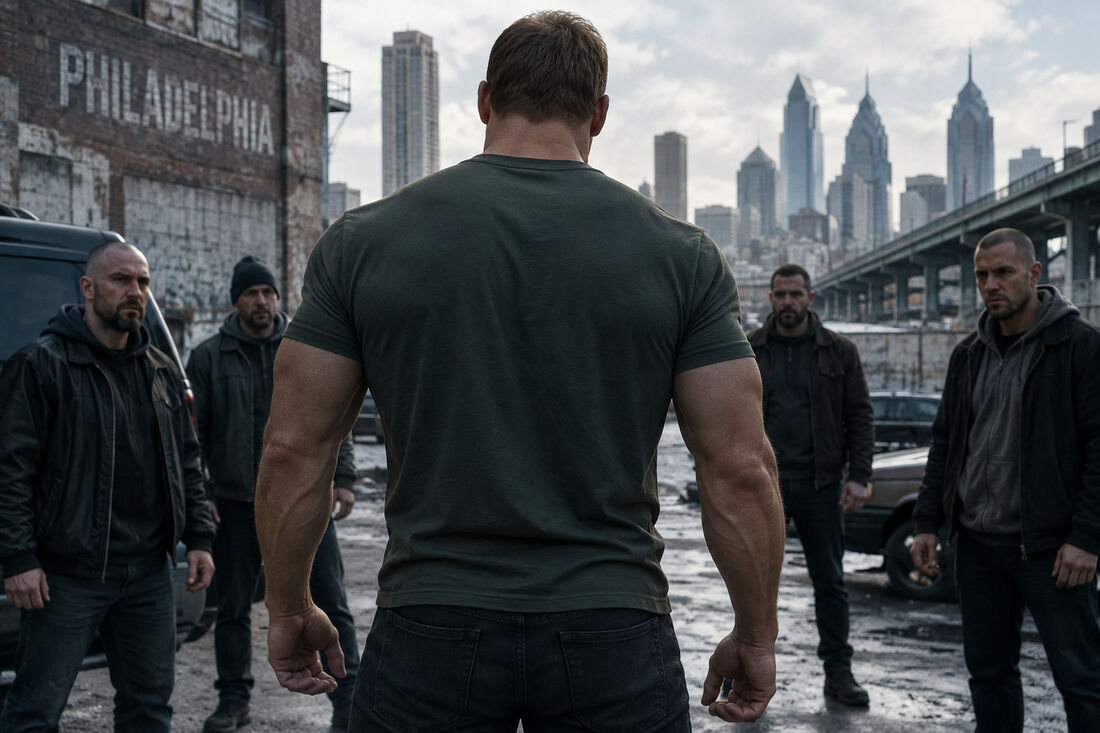
The physique made famous by TV’s Reacher isn't about having the smallest waist possible or looking shredded for one photograph. It's about looking enormous, powerful and athletic from every angle. Alan Ritchson's portrayal of Reacher has helped bring back a physique many bodybuilders actually want: huge shoulders, a thick chest and back, powerful arms, substantial legs and enough leanness for everything to remain visible. Building that kind of body requires a different mentality from simply chasing a six-pack. You need to think big: big exercises, progressively bigger weights, plenty of quality food and serious recovery.
1. Build Your Training Around the Big Exercises
If you want a big body, make the big compound exercises the foundation of your programme. Squats, deadlifts, bench presses, incline presses, overhead presses, pull-ups, heavy rows and dips recruit large amounts of muscle and allow you to progressively handle serious loads. These are the exercises that can add thickness to your entire frame rather than simply pumping an individual muscle for twenty minutes.
That doesn't mean every workout needs to become a powerlifting competition. You're still bodybuilding. Use compound movements with controlled technique, good range of motion and the intention of loading the target muscles. For many of your major exercises, working predominantly within roughly 5–10 repetitions can provide an excellent combination of load and muscle-building volume, while accessory movements can often be pushed into higher repetition ranges.
2. Prioritise the Muscles That Make You Look Huge
A genuinely massive physique isn't simply about gaining as much bodyweight as possible. Proportion determines how impressive that weight looks. The Reacher-type silhouette comes largely from broad shoulders, a thick upper chest, substantial traps, wide lats, a dense back and large arms sitting on top of a powerful lower body.
Give special attention to overhead and incline pressing for the shoulders and upper chest, lateral raises for additional shoulder width, pull-ups and pulldowns for lat width, heavy rows for back thickness, shrugs or heavy pulling for the traps and direct biceps and triceps work to finish the arms. But don't neglect your legs. Thick quads, hamstrings, glutes and calves provide the foundation that makes a big upper body look believable rather than top-heavy.
3. Get Seriously Stronger Over Time
Muscle needs a reason to grow. Doing exactly the same weights, repetitions and exercises month after month gives your body progressively less reason to adapt. Progressive overload therefore needs to become one of your fundamental rules.
Suppose you're incline pressing 80kg for eight good repetitions. Your objective over the coming months might be to perform 85kg for eight, then 90kg and eventually considerably more while maintaining good execution. The same principle applies to rows, squats, presses and other major movements. You don't have to increase the weight every workout. You can progress by performing another repetition, improving technique, increasing range of motion or completing more productive training volume. Over several years, however, a dramatically more muscular body will normally be accompanied by dramatically greater training capability.
4. Eat Big Enough to Actually Grow
This is where many would-be mass monsters fail. They train like they're trying to become enormous and then eat like they're trying to stay permanently beach-ready. Building substantial amounts of muscle requires energy. For most people seeking maximum muscular development, that means spending significant periods consuming more calories than they expend.
The answer isn't an uncontrolled dirty bulk. Eating pizzas, cakes and takeaways until your waist expands faster than your shoulders isn't intelligent mass building. Create a moderate calorie surplus and build your diet around quality protein, carbohydrates and fats. Beef, chicken, turkey, fish, eggs, rice, potatoes, oats, pasta, fruit, vegetables, dairy, nuts and quality oils can form the backbone of a serious mass-building diet.
Protein intake should generally sit somewhere around 1.6–2.2g per kilogram of bodyweight per day for resistance-trained individuals. Carbohydrates should also receive serious attention because they help fuel the kind of high-performance training required to build a big physique. If you're constantly trying to train heavy while running on virtually no carbohydrates, you're potentially making the job much harder than it needs to be.
5. Don't Be Afraid of Big Meals
If you're a naturally big eater, getting sufficient calories may be easy. For naturally lean people with small appetites, it can become one of the hardest parts of bodybuilding. Four or five substantial meals can sometimes be easier than trying to force everything into two enormous sittings. Rice, oats, pasta, potatoes, dried fruit, nut butters, olive oil and calorie-dense shakes can also help increase energy intake without leaving you permanently stuffed.
Your post-training period is a particularly convenient time to get protein and carbohydrates into your diet. A whey shake alongside a carbohydrate source can be useful immediately after training when convenience matters, followed by a proper meal later. Don't obsess over a tiny anabolic window, though. Your total daily protein, calories and carbohydrate intake matter far more than whether you managed to drink your shake within five minutes of your final set.
6. Train Hard – Then Get Out of the Gym
Building a huge body doesn't mean spending three hours in the gym every day. There comes a point where additional sets create more fatigue without providing enough additional growth stimulus to justify them. Attack your important exercises, train your working sets with genuine intensity and then recover.
Most muscles can generally be trained more than once per week depending on your volume, intensity and ability to recover. A push/pull/legs system, upper/lower split or intelligently designed four- or five-day bodybuilding routine can all work. The precise split matters less than consistently training every major muscle hard enough to stimulate growth while allowing sufficient recovery before attacking it again.
7. Recovery Is When You Become Bigger
You don't actually grow while you're grinding through a heavy set. Training provides the stimulus and recovery allows adaptation to take place. If you're training brutally hard six or seven days per week, sleeping five hours a night and living under constant stress, eventually something has to give.
Aim for approximately 7–9 hours of quality sleep and take rest days seriously. Pay attention to persistent soreness, falling strength, disrupted sleep, unusually low motivation and repeated poor workouts. These can all indicate that fatigue is accumulating. Sometimes the smartest bodybuilding decision isn't adding another workout; it's taking an additional recovery day and returning stronger.
8. Chase Proportion, Not Just Bodyweight
This may be the biggest lesson from the Reacher look. Simply becoming heavier doesn't guarantee that you'll look better. Continually assess your proportions. If your arms are overpowering your shoulders, prioritise delts. If your chest is enormous but your back disappears from the side, increase your pulling work. If your upper body looks like a heavyweight but your legs look like they belong to a lightweight, it's time to squat.
A great mass-building physique has balance. Shoulders make the waist appear smaller, lats create width, upper-chest thickness fills out clothing, traps connect the shoulders to the neck, arms complete the silhouette and powerful legs make the whole physique look formidable.
The Reacher Formula: Train Big, Eat Big, Recover Big
There's no secret exercise that suddenly produces a Reacher-sized body. The formula is brutally straightforward but takes years to execute properly: base your training around heavy compound movements, progressively become stronger, attack every major muscle, eat enough quality food to support growth and give your body enough sleep and recovery to actually build what you're demanding from it.
Don't chase scale weight for the sake of being heavy and don't spend your entire mass-building phase frightened of gaining a small amount of body fat. Keep your waist under control while concentrating on adding quality size to your shoulders, chest, back, arms and legs.
Think big exercises. Think big meals. Think big recovery. Then repeat the process for years. That's how you build a body that doesn't just look muscular with its shirt off – it looks massive the moment it walks into the room. If you want to accelerate gains, use Nuclear Creatine, Norateen Heavyweight II, Norateen X and Norateen XXX.




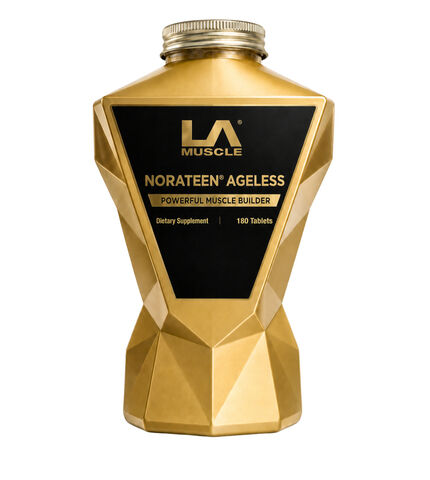
Norateen Ageless
World First Norateen To Rediscover Your Prime - Turn Back Time

Norateen Heavyweight II
Voted No.1: Men's Health BBC/ SKY TV. No side effects, full guarantee