SIGN IN
 REGISTER


Tuesday, 8th September 2026
Creatine Myths Debunked
How to Get the Best Results From Creatine
By LA Muscle on 08.09.2026 12:24 pm



Creatine has been around for decades, yet it remains one of the most misunderstood supplements in the gym. Depending on who you listen to, creatine supposedly damages your kidneys, makes you fat, causes dehydration, must be cycled and only works if you take enormous doses. Most of these claims either misunderstand what creatine actually does or exaggerate limited evidence. Creatine is one of the most extensively researched sports supplements available, and its ability to improve performance during repeated bouts of high-intensity exercise and support gains in lean mass alongside resistance training is well established. So let's separate the myths from what actually matters.
Myth 1: Creatine Is a Steroid
Creatine is not an anabolic steroid. It's a naturally occurring compound produced from amino acids and stored predominantly in skeletal muscle as creatine and phosphocreatine. We also obtain creatine through foods, particularly meat and fish. Its importance to athletes comes from its involvement in rapidly regenerating ATP, the immediate energy currency used by your muscles. Increasing muscular creatine stores can therefore help support repeated high-intensity efforts such as weight training and sprinting, but that doesn't make it a steroid because the mechanisms are completely different.
Myth 2: Creatine Makes You Fat
Creatine doesn't suddenly create body fat. What can happen is an increase in bodyweight because creatine increases water retention within muscle cells, but that's an important distinction because water associated with increased muscular creatine storage isn't the same thing as gaining fat. In fact, the fuller appearance it can give muscles is one reason many bodybuilders like using creatine. Over time, if creatine helps you train harder and gain more lean tissue, the scales may increase further, but again, that isn't necessarily fat gain.
Myth 3: Creatine Damages Healthy Kidneys
This is probably the most persistent creatine myth. Creatine supplementation can increase blood creatinine, which is commonly used as one marker when assessing kidney function, and this can create confusion because an elevated creatinine result isn't automatically evidence that creatine has damaged the kidneys. Research examining recommended creatine supplementation in healthy people has generally not demonstrated kidney damage. However, this shouldn't be interpreted as saying everybody should automatically take it, and anyone with kidney disease, abnormal renal results or another relevant medical condition should speak to their doctor before using creatine.
Myth 4: You Must Load Creatine
The traditional approach is to take approximately 20 grams per day, usually divided into four servings, for around five to seven days before switching to a lower maintenance dose. Loading works because it saturates muscular creatine stores relatively quickly, but it isn't compulsory. Taking around 3–5 grams of creatine monohydrate daily can also progressively increase muscular creatine stores; it simply takes longer. So if you want rapid saturation, loading is an option, while if you're in no hurry, consistent daily supplementation is perfectly reasonable.
Myth 5: You Need to Cycle On and Off
There's no established requirement for healthy adults to cycle creatine simply to make it continue working. The idea probably developed from bodybuilding culture, where many supplements and drugs historically followed "on" and "off" cycles, but creatine doesn't need to be treated in the same way. Consistency is generally more important than complicated cycling protocols.
Myth 6: Creatine Causes Dehydration
This sounds plausible because creatine affects water distribution, but the evidence doesn't support the simplistic idea that taking creatine automatically dehydrates you. Your muscles hold more water when their creatine content increases, which is quite different from saying your entire body becomes dehydrated. You should obviously remain adequately hydrated when exercising, particularly during prolonged or intense training and in hot conditions, whether you're using creatine or not.
Myth 7: More Creatine Means More Muscle
Once your muscles are effectively saturated, continually increasing your creatine intake doesn't mean you'll keep storing unlimited amounts of it, and this is where people can end up wasting supplements. If a sensible amount works, taking three or four times as much isn't automatically three or four times better. Think of muscular creatine storage more like filling a fuel tank: once the tank is essentially full, continually pouring more fuel over it doesn't give the car a bigger tank.
Myth 8: Creatine Builds Muscle Without Training
Creatine isn't a replacement for hard training. Its real value comes from helping support the type of repeated high-intensity performance that can contribute to better training. If you can produce slightly more work, maintain performance across sets or progressively increase your training output, those small improvements can accumulate over months, but you still have to provide the stimulus. Creatine plus progressive resistance training makes sense; creatine plus sitting on the sofa doesn't magically produce bigger biceps.
Myth 9: Creatine Is Only for Bodybuilders
Creatine became famous through bodybuilding, but its applications extend well beyond bodybuilding. It's widely used in strength and power sports and has been extensively investigated in sports nutrition research. Research interest has also expanded into areas outside pure sports performance, including ageing and cognition, although potential benefits in these areas shouldn't be confused with the much stronger evidence supporting creatine's role in high-intensity exercise performance.
How to Get the Best Results From Creatine
The first rule is consistency. Creatine works by increasing muscular creatine availability, so sporadically taking it only on the days you remember isn't the smartest approach. Daily use is much simpler. For conventional creatine monohydrate, around 3–5 grams daily is a commonly used maintenance strategy. Larger athletes sometimes use amounts towards the upper end of typical dosing ranges, but there's little reason to believe enormous servings automatically produce superior results once muscle stores are saturated.
You can take creatine around your workout if that's convenient, but don't become obsessed with the exact minute you swallow it. Maintaining elevated muscle creatine stores over time matters far more than trying to hit an imaginary 10-minute anabolic window. Combine creatine with progressive training and track your lifts, repetitions and total training volume. If you're using creatine but performing exactly the same weights and repetitions month after month, you're missing the opportunity to exploit improved training capacity.
Nutrition matters too. Eat sufficient protein, consume enough total calories for your goal, sleep properly and train each muscle consistently. Creatine should enhance a good programme, not compensate for a bad one.
What Should You Look for in a Creatine Supplement?
Quality and formulation matter, so look for a product from a reputable manufacturer with clearly stated ingredients and sensible serving instructions rather than choosing a creatine purely because the label makes outrageous promises. Plain creatine monohydrate remains the benchmark because it has the enormous advantage of decades of research behind it. More advanced creatine products can combine creatine with additional ingredients or delivery systems for people who want something beyond a basic single-ingredient powder. The best product ultimately depends on what you want from your supplementation and how it fits into your overall training programme.
Creatine isn't a steroid, it doesn't automatically make you fat, you don't have to load it and there's no established need for healthy users to continually cycle on and off it. It's simply one of the best researched performance supplements available. Use it consistently, train progressively, eat properly and give it enough time to work.
For a more advanced creatine formula, check out LA Muscle Nuclear Creatine or Explosive Creatine.









Norateen Gold
Expensive next-level ingredients in an award-winning formula, 100% guaranteed gains
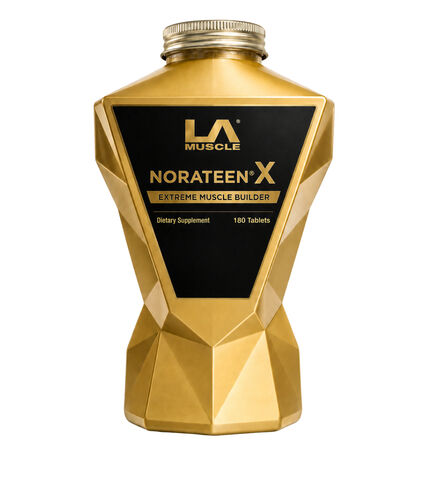
Norateen X
Extremely Strong Norateen - Insane 5kgs muscle gains