SIGN IN
 REGISTER


The Knowledge > How To Build Muscle >
Tuesday, 8th September 2026
Here’s How to Make Press-Ups Harder
and Build a Great Body at Home
By LA Muscle on 08.09.2026 12:16 pm



Can't get to the gym? That doesn't mean your training has to stop. One of the most underestimated muscle-building exercises is already available to you anywhere, at any time: the press-up.
The problem isn't that press-ups are too easy. The problem is that most people only perform the easiest version. Once you can knock out 30 or 40 standard press-ups, simply doing more and more repetitions becomes inefficient. The answer is to make each repetition harder.
With a few changes to your hand position, body angle, tempo and technique, a basic press-up can become a seriously demanding upper-body exercise capable of hammering your chest, shoulders, triceps and core. Here are some of the best ways to do it.
1. Slow Everything Down
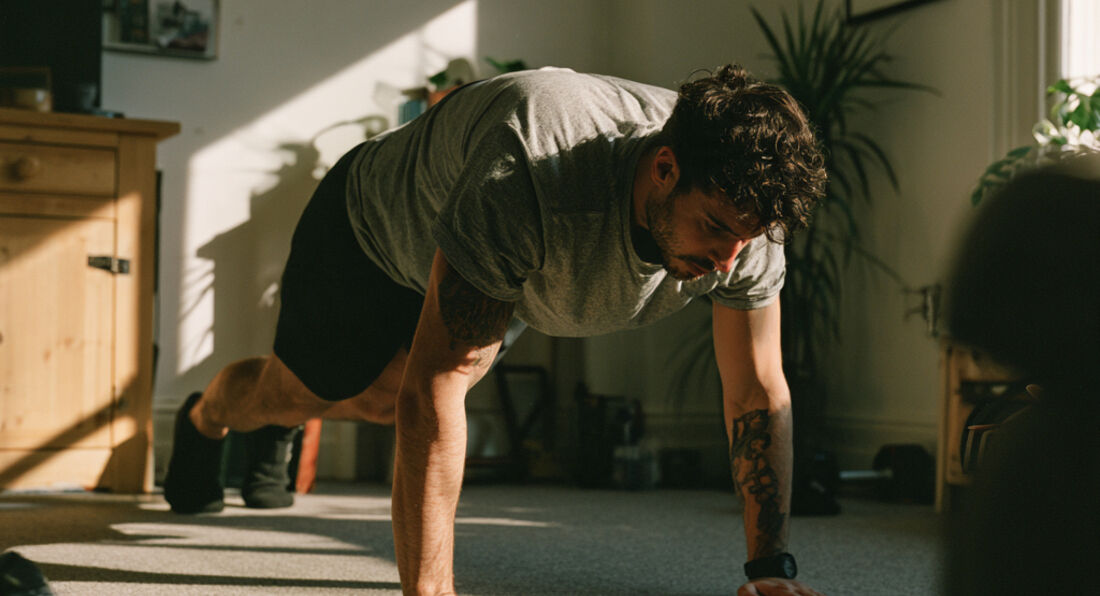
This is probably the easiest way to transform a normal press-up without needing any equipment. Instead of dropping down and bouncing straight back up, take five seconds to lower yourself towards the floor, pause for one or two seconds just above it and then push yourself back up under control.
Try doing 10 press-ups this way and you'll quickly understand the difference. Slowing the movement increases the amount of time your muscles are working during every repetition and makes it much harder to rely on momentum.
An even nastier variation is the 10-second press-up. Take five seconds going down and five seconds coming back up. If ordinary press-ups have become easy, they won't feel easy anymore.
2. Put Your Feet on the Sofa
Elevating your feet instantly changes the exercise. Put your feet on a sofa, chair, bed or another stable raised surface while keeping your hands on the floor. The higher your feet go, the more demanding the movement generally becomes and the greater the emphasis on the upper chest and shoulders.
Start with something relatively low and gradually increase the height. Keep your body straight rather than allowing your hips to sag. Think of your entire body as one solid plank moving up and down.
3. Move Towards One-Arm Press-Ups
You don't need to be able to perform a full one-arm press-up to benefit from one-arm training. Start by placing one hand normally underneath you and the other hand farther out to the side. Gradually make the working arm do more of the work.
Another progression is to place the assisting hand on a football, stack of books or another stable raised object. This reduces how much assistance that arm can provide. Over time, you can progressively shift more of your bodyweight onto the working side.
Suddenly you're no longer trying to do 50 easy press-ups. You might struggle to perform eight controlled repetitions on each side.
4. Try Archer Press-Ups
Archer press-ups are an excellent bridge between standard and one-arm press-ups. Place your hands much wider than normal. As you lower yourself, move your chest towards one hand while keeping the opposite arm relatively straight. Push yourself back to the middle and repeat on the other side. Your working arm is now handling a much greater percentage of your bodyweight. They also look deceptively easy until you try them properly. Aim for 6–12 controlled repetitions on each side.
5. Add Explosive Press-Ups
Not every press-up needs to be slow. You can attack the opposite end of the spectrum and become explosive. Lower yourself under control and then drive away from the floor as powerfully as possible so your hands leave the ground. Once you're comfortable doing this, you can progress to clap press-ups or simply concentrate on getting higher off the floor. The objective isn't exhaustion for the sake of exhaustion. It's producing force quickly. Explosive press-ups can add a completely different stimulus to your home workouts.
6. Use 1½ Repetitions
Here's a simple technique that makes an ordinary press-up surprisingly unpleasant. Lower yourself all the way down, come halfway up, go back down again and then push all the way to the top. That's one repetition. You're effectively adding extra work where the chest and triceps are under significant tension. Try 8–12 repetitions and you'll probably find them considerably harder than 20 normal press-ups.
7. Stop Just Above the Floor
Pauses remove momentum. Lower yourself until your chest is just above the floor and hold that position for three seconds before pressing back up. Don't lie on the floor. Stay suspended just above it. That three-second pause will feel increasingly long as the set progresses. It also forces you to maintain body tension rather than bouncing out of the bottom. For an extreme version, perform five normal press-ups and then hold the bottom position for 10 seconds. Repeat the sequence until you can't maintain good form.
8. Bring Your Hands Together
Close-grip press-ups shift more of the workload towards the triceps. Bring your hands closer together underneath your chest and keep your elbows controlled as you lower yourself. You don't necessarily need to make a perfect diamond with your hands. Find a narrow position that feels comfortable on your wrists and shoulders. If your goal is bigger arms at home, these should be one of your staple press-up variations.
9. Add Weight
Once bodyweight variations become easy, there's nothing wrong with adding resistance. A properly fitted weighted vest is probably the simplest solution because the resistance remains secure and evenly distributed. A loaded backpack can also work, but make sure the contents can't move around and that the bag is securely positioned. Don't balance loose weight plates on your back when training alone. Adding even 5–10 kg can dramatically change the difficulty of a press-up.
10. Finish With a Press-Up Mechanical Drop Set
This is where you can turn several variations into one brutal finishing set. Start with your hardest press-up variation and continue until you're close to technical failure. Immediately move to an easier variation and continue. For example, begin with feet-elevated press-ups, move into standard press-ups and then finish with your hands elevated on a sofa or sturdy bench. You haven't changed the muscles you're training. You've simply made the exercise progressively easier as fatigue increases, allowing the set to continue. One or two rounds can be more than enough.
The 15-Minute Home Chest Workout
If you can't get to the gym, try this: perform 10 slow press-ups using a four-second lowering phase, followed by 8–12 feet-elevated press-ups, 6–10 archer press-ups on each side, 10 close-grip press-ups and finish with one mechanical drop set. Rest around 60–90 seconds between exercises and repeat the circuit two or three times depending on your ability. You can make the workout progressively harder each week by adding repetitions, slowing the eccentric phase, increasing your foot elevation, adding resistance or progressing towards harder single-arm variations.
Your Body Doesn't Know You're Training at Home
Your muscles don't know whether you're inside a £200-a-month gym or on the carpet in your living room. They respond to the demands you place upon them. That's the secret to effective home training. Don't ask, "How many press-ups can I do?" Ask, "How can I make these 10 press-ups harder?" Once 20 repetitions become easy, don't automatically do 30. Find a variation that makes eight or ten repetitions difficult again. Progress that exercise until it becomes easy and then increase the challenge once more. Do that consistently and press-ups stop being the exercise you do when you can't get to the gym. They become a serious training tool for building your chest, shoulders, triceps and core — wherever you happen to be.



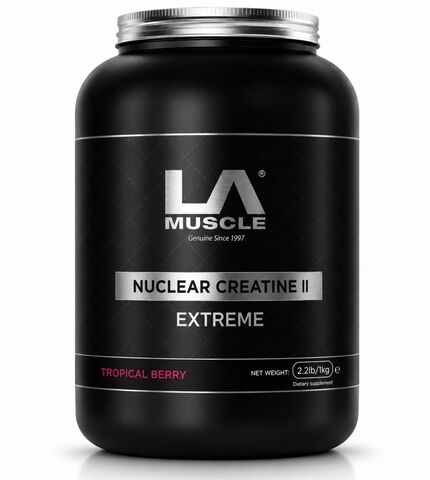
Nuclear Creatine II Extreme
World's Strongest Testosterone Creatine Formula
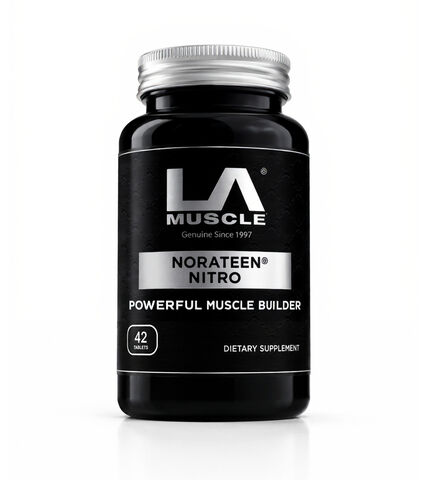
Norateen Nitro
Testosterone muscle builder AND Nitric Oxide booster