SIGN IN
 REGISTER


The Knowledge > Exclusive Articles >
Monday, 5th October 2026
Truth about the best time to train
According to science
By LA Muscle on 05.10.2026 07:26 am



Walk into a gym at 7am and you will hear that morning training is best for burning fat. Go back at 6pm and someone will tell you that evening training is better because you are stronger, warmer and hormonally primed to build muscle. So who is right?
The scientific answer is more interesting than simply saying “morning” or “evening”. Your body changes considerably over the course of the day, and exercise performance can change with it. However, the best time to train depends on whether your priority is maximum performance, building muscle, losing body fat or simply being consistent enough to achieve results.
The body's internal clock matters
Humans operate according to a roughly 24-hour circadian rhythm. Body temperature, alertness, hormone secretion, sleepiness, metabolism and physical performance all fluctuate throughout the day. This has measurable effects in the gym. Research examining performance across the day has found that several measures of physical performance tend to be higher later in the day. Anaerobic power and jumping performance, for example, often peak during the afternoon and early evening, while some measures of strength also favour this period. This provides a scientific basis for the commonly reported experience of feeling stronger during an afternoon or early-evening workout.
However, performing better during one workout does not automatically mean that you will build more muscle over several months.
What is the best time to train for muscle growth?
If your main objective is hypertrophy, there is currently no convincing evidence that you must train at a particular time. Research directly comparing morning and evening resistance training has generally found that although people may initially display greater strength later in the day, improvements in both strength and muscle size can be achieved whether training takes place in the morning or evening.
In one controlled study, men trained either between 7–9am or 5–7pm. Quadriceps muscle size increased in both groups, and the difference in hypertrophy between morning and evening training was not statistically significant. Another study comparing resistance training at approximately 7:30–8:30am with training at 4–5pm produced a similar result. Muscle hypertrophy measured by MRI increased by 8.8% in the morning group and 11.9% in the afternoon group, but the difference between groups was not statistically significant. Strength also increased substantially in both groups.
Why might late afternoon still have an advantage?
Although long-term muscle growth appears possible at virtually any sensible training time, there is a potential practical advantage to training later in the day: you may be capable of producing slightly more force and power. If you can lift a little more weight, perform an additional repetition or maintain better performance across multiple sets, this could potentially translate into a greater training stimulus over time.
There is also some research suggesting an evening advantage under certain conditions. A 24-week study involving combined strength and endurance training found that all groups gained muscle, but during weeks 13–24 the evening-training groups experienced greater increases in muscle cross-sectional area. That does not prove that evening training is inherently more anabolic, however, because the broader scientific literature does not consistently reproduce this advantage.
For someone whose schedule allows complete freedom, approximately 3pm–7pm is therefore a very reasonable window for serious resistance training. By this point you have usually been awake for several hours, eaten several meals, consumed protein and carbohydrate, become fully hydrated and reached a higher body temperature. Strength and power also frequently perform well during this period.
However, this should not be interpreted as meaning that a 7am workout builds less muscle. If you consistently train harder and more regularly at 7am, then 7am may be the better muscle-building time for you. Your muscles respond primarily to progressive resistance training, sufficient training volume, adequate protein, appropriate energy intake and recovery, not simply to what the clock says.
Does testosterone make morning training better?
This is one of the more persistent bodybuilding myths. Testosterone concentrations are normally higher in the morning, which has led to the claim that morning resistance training must therefore be more anabolic. It does not work quite that simply. Research comparing morning and afternoon resistance training has found similar improvements in muscle size and strength despite differences in the hormonal environment throughout the day.
Short-term fluctuations in testosterone and cortisol surrounding a workout should therefore not be treated as a reliable predictor of how much muscle somebody will ultimately build. Your training stimulus and recovery over weeks, months and years matter far more.
What is the best time to exercise for fat loss?
This question requires an important distinction: burning more fat during a workout is not necessarily the same as losing more body fat.
During exercise the body continuously switches between carbohydrate and fat as fuel. Morning exercise, particularly exercise performed before breakfast, can increase the proportion of energy being supplied by fat during that workout. A systematic review and meta-analysis of 27 studies involving 273 participants found that aerobic exercise performed while fasted produced significantly greater fat oxidation during exercise than the same exercise performed after eating.
That sounds like a compelling argument for fasted morning cardio, but there is a catch. The fact that your body burns more fat between 7am and 8am does not necessarily mean that you will have lost more body fat at the end of the month. The body can compensate throughout the remainder of the day by altering carbohydrate and fat utilisation. Long-term fat loss ultimately depends much more heavily on overall energy balance.
Morning versus evening exercise for actual weight loss
Researchers have directly tested this question. In one randomised controlled trial, 100 inactive adults with overweight or obesity were assigned to exercise between either 6–9am or 4–7pm. Participants were prescribed 250 minutes of aerobic exercise per week for 12 weeks. The morning group lost an average of 2.7kg, while the evening group lost 3.1kg. In other words, both times worked and there was no dramatic fat-loss advantage from exercising in the morning.
Reviews of the broader scientific literature reach much the same conclusion. Some experiments favour morning exercise, others favour evening exercise, and the overall evidence remains mixed. Exercise timing may also indirectly affect fat loss by changing appetite, food intake, sleep and physical activity during the rest of the day.
This is an important point. The best fat-loss training time may have less to do with the calories burned during the workout and more to do with what that workout makes you do during the other 23 hours of the day.
Is fasted morning cardio worth doing?
It can be. If you enjoy waking up and performing 30–45 minutes of walking, cycling or other moderate cardio before breakfast, there is nothing inherently wrong with it. Fat oxidation during the session is likely to be relatively high. However, increased fat oxidation should not be confused with guaranteed increased body-fat loss.
Fasted cardio is therefore a tool rather than a metabolic shortcut. If training fasted makes you exercise less intensely, dramatically increases your hunger afterwards or causes you to compensate by eating more later, any theoretical advantage can disappear.
What if you want to build muscle and lose fat?
For someone trying to improve body composition by increasing or retaining muscle while reducing body fat, the priorities become clearer. Resistance training should be performed when you can produce your highest-quality workouts. For many people this will be during the afternoon or early evening.
Cardio can then be placed wherever it interferes least with resistance training and recovery. This might mean performing low-intensity cardio in the morning and weights later in the day. For example, someone might perform walking or moderate cardio between 7–9am and resistance training between 3–7pm. This can be an excellent arrangement for somebody with the lifestyle to accommodate it because it separates cardio and weights while placing resistance training during a period when physical performance is often high. However, it is certainly not necessary to train twice per day to become lean and muscular.
Your body can adapt to your training time
There is another fascinating element to the research. If you habitually train in the morning, your ability to perform in the morning can improve. Research on time-specific resistance training suggests that morning training can reduce the normal morning disadvantage in strength, and there is evidence that some performance improvements may be specific to the time at which you habitually train.
This has obvious implications for athletes. If you know that your competition takes place at 10am, regularly training at or around 10am may make more sense than always training at 6pm simply because your evening gym performance is slightly better.
Don't sacrifice sleep to train early
There is little value in waking at 5am to supposedly maximise fat burning if doing so reduces your sleep every night. Likewise, an extremely late workout that leaves you overstimulated and consistently interferes with your sleep may not be ideal simply because evening strength performance can be higher.
Recovery is an essential part of the muscle-building and fat-loss process. Your training time should therefore fit around adequate sleep rather than continually compete with it.
So, what is the best time to train?
If your primary objective is maximum strength and gym performance, the afternoon to early evening is probably the strongest overall choice. If your goal is building muscle, almost any consistent training time can produce excellent results, although afternoon or early-evening training may provide a small performance advantage for some people.
For fat loss, the time of day is much less important than consistently exercising while maintaining an appropriate overall calorie intake. Morning fasted cardio can increase fat oxidation during the actual workout, but this should not be mistaken for proof that it produces greater long-term fat loss.
If you are trying to simultaneously build muscle and lose fat, a very effective arrangement can be light or moderate cardio in the morning and resistance training in the afternoon or early evening. This allows the two forms of exercise to be separated while giving you the opportunity to perform your most demanding resistance training at a time when strength, power and body temperature are often relatively high.
Ultimately, there is no magical hour when the human body suddenly starts building muscle or burning body fat. A 6pm workout will not rescue a poor training programme, and a 7am fasted workout will not overcome excessive calorie intake. For muscle growth, progressive overload, sufficient training volume, adequate protein, calories and recovery dominate the equation. For fat loss, maintaining an appropriate calorie deficit while retaining resistance training and sufficient protein is considerably more important than whether your workout begins at 7am or 7pm.
If your schedule is completely flexible and you want every possible marginal advantage, there is a reasonable scientific case for placing your hardest weight-training sessions in the late afternoon or early evening, while using morning cardio as an optional tool for increasing activity and energy expenditure. But the most scientifically supported best time to train is ultimately the time at which you can train hard, recover properly and repeat it consistently for months and years.








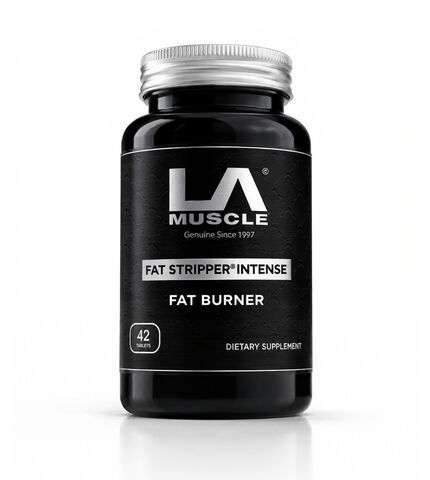
Fat Stripper Intense
Results in just days, no killing yourself in the gym, you take NO RISK

Vasculator EXTREME
2 months' supply of very powerful gym muscle pills