SIGN IN
 REGISTER


The Knowledge > Exclusive Articles >
Wednesday, 26th August 2026
10 Common Problems Gym Goers Encounter and How to Overcome Them
By LA Muscle on 26.08.2026 12:34 pm



Going to the gym should be simple: train hard, eat well, recover and watch your body improve. In reality, almost everyone who trains regularly eventually encounters problems that can slow progress, destroy motivation or make workouts feel like a chore. From hitting a stubborn plateau to constantly feeling sore, many of these problems have surprisingly straightforward solutions. Here are 10 of the most common problems gym goers encounter and what you can do about them.
1. You've Stopped Making Progress
One of the most frustrating experiences in the gym is doing everything you normally do but no longer seeing results. Your weights stop increasing, your muscles don't appear to be growing and your physique seems exactly the same month after month. This is the classic training plateau and often occurs because your body has adapted to what you're asking it to do.
The solution is to give your body a new reason to adapt. Progressive overload doesn't simply mean adding more weight every workout. You can increase repetitions, improve technique, increase range of motion, change exercise selection, manipulate rest periods or increase training volume. Start recording your workouts too. If you don't know what you lifted six weeks ago, it's difficult to know whether you're actually progressing today.
2. You Never Seem to Have Enough Energy
You arrive at the gym determined to have a great workout, only to feel exhausted after your warm-up. Lack of training energy can have numerous causes, but insufficient sleep, inadequate calories, dehydration and poor meal timing are among the obvious places to look.
Make sure you're eating enough to support your activity level and don't become so obsessed with eating "clean" that you're chronically under-fuelled. Carbohydrates are particularly useful around demanding training sessions because muscle glycogen provides an important source of energy during resistance training. Hydration matters too. Turning up dehydrated and expecting maximum performance is rarely a winning strategy. Finally, don't underestimate sleep. A stimulant can make you feel more awake, but it can't completely compensate for repeatedly sleeping five hours a night.
3. You're Always Sore
Some muscle soreness after an unfamiliar or particularly demanding workout is perfectly normal. Being so sore after every workout that climbing stairs becomes a major event isn't necessarily a sign of superior training.
Constant excessive soreness can indicate that you're doing more work than you're currently recovering from. Look at your overall training volume, frequency and intensity rather than automatically adding more exercises. Gradually increase workload instead of suddenly doubling it, and make sure you're giving heavily trained muscle groups adequate recovery time. Protein intake, total calories, hydration and sleep also contribute to recovery. The objective is to stimulate the muscle sufficiently to make it adapt — not to destroy it every time you enter the gym.
4. You Can't Feel the Muscle You're Supposed to Be Training
You're performing a chest exercise but mostly feel your shoulders. You train your back but your biceps give up first. You perform squats and feel everything except the muscles you're trying to target.
Before adding more weight, examine your technique. Reduce the load and perform slower, controlled repetitions while concentrating on the movement of the target muscle. Experiment with your grip, stance, exercise angle and range of motion because individual anatomy means the same exercise won't necessarily feel identical for everyone. Machines and isolation exercises can also be useful for learning how a particular muscle contracts. Once you establish good mechanics, progressively adding resistance becomes much more productive.
5. You're Getting Stronger but Don't Look More Muscular
Strength and muscle size are related, but they aren't exactly the same thing. Improvements in technique and neurological efficiency can make you stronger without producing an equivalent increase in muscle size.
If building muscle is the priority, make sure your training actually provides enough hypertrophy-focused work. Use controlled repetitions, adequate training volume and sets performed sufficiently close to muscular failure. Don't turn every exercise into a competition to move the greatest possible weight from A to B. The muscle doesn't know what's written on the dumbbell; it responds to tension and the demands placed upon it. Nutrition matters just as much. Building significant muscle while consistently eating too little is unnecessarily difficult.
6. You Can't Lose the Last Bit of Body Fat
The first few kilograms may disappear relatively easily, but eventually fat loss slows down. At this stage many people immediately add enormous amounts of cardio or slash their food intake.
A better approach is to reassess what you're actually consuming and how active you are outside the gym. Portions gradually increase, snacks get forgotten and weekend calories can wipe out much of the deficit created during the week. At the same time, people sometimes unconsciously move less when dieting. Maintain resistance training to help preserve muscle, keep protein intake adequate and create a sensible calorie deficit that you can maintain. Extreme diets may produce dramatic short-term scale changes, but consistency usually wins over several months.
7. You Keep Getting Small Injuries and Niggles
A painful shoulder, irritated elbow, troublesome knee or aching lower back can quickly interfere with otherwise productive training. One common mistake is repeatedly training through pain while hoping it will simply disappear.
Pain shouldn't automatically be considered a normal consequence of training. Review the exercise causing the problem, your technique, your training volume and how quickly you've increased the load. Sometimes changing grip, range of motion or exercise selection can remove unnecessary irritation while still allowing the muscle to be trained effectively. Warm up properly before demanding lifts and don't allow ego to dictate the weight you're using. Persistent, severe or worsening pain deserves proper assessment rather than endless experimentation in the gym.
8. Your Workouts Take Far Too Long
A gym session gradually expands from 60 minutes to two hours because you've accumulated more exercises, more sets and increasingly long conversations between them. More training isn't automatically better training.
Go into the gym with a plan. Prioritise the exercises that matter most, eliminate unnecessary duplication and monitor your rest periods. If you've already performed several productive exercises for a muscle, another four variations may contribute little beyond fatigue. For many people, a focused 60–75-minute session can be considerably more productive than wandering around the gym for two hours without any clear structure.
9. You've Lost Your Motivation
Almost everyone experiences periods when they simply don't feel like training. The problem occurs when missing one session becomes a week, which becomes a month.
Don't rely entirely on motivation because motivation fluctuates. Create a routine in which training happens at predetermined times rather than whenever you happen to feel enthusiastic. Setting measurable goals can also restore purpose. Instead of vaguely deciding to "get fitter," aim to add 10 kg to a particular lift, perform 10 pull-ups, lose 5 cm from your waist or train consistently three times a week for the next eight weeks. Changing your programme, training environment or workout partner can also make training feel fresh again.
Sometimes the best solution is simply to turn up. You don't need to feel excited about every workout. Consistency during the periods when you aren't motivated is often what separates long-term progress from repeatedly starting again.
10. You're Training Hard but Your Body Isn't Changing
This is perhaps the biggest frustration of all. You're going to the gym several times a week, sweating, lifting and putting in the hours, yet when you look in the mirror several months later very little seems to have changed.
When this happens, examine the entire picture rather than simply training harder. Are your lifts progressing? Are you eating enough protein? Are your calories appropriate for whether you're trying to gain muscle or lose fat? Are you sleeping properly? Are you following the same programme long enough to measure whether it works? Are you genuinely training intensely or simply completing exercises?
Training is only the stimulus. Your body still needs the raw materials and recovery necessary to respond to that stimulus. Track your workouts, body weight and measurements, and take progress photographs under similar conditions every few weeks. What feels like "no progress" can sometimes turn out to be significant improvement when you have objective information to compare.
Most gym problems aren't solved by finding a secret exercise or completely reinventing your programme. They're usually solved by improving the fundamentals. Train progressively, use good technique, eat according to your goal, consume sufficient protein, sleep properly and allow yourself to recover.
Most importantly, judge your progress over months rather than individual workouts. You will have bad sessions, periods when your strength stalls and weeks when motivation disappears. That's normal. The people who ultimately transform their bodies aren't necessarily those who have perfect workouts — they're the ones who identify what isn't working, make sensible adjustments and keep going.







Fat Buster
4 weight loss supplements in one! Risk-free results
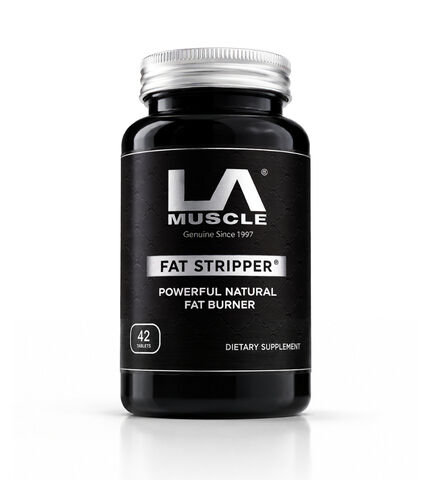
Fat Stripper
Stimulant-free, natural fat burner with no side effects, lose weight NOW!