SIGN IN
 REGISTER


The Knowledge > How To Build Muscle >
Thursday, 20th August 2026
What if you had to choose 3 exercises?
To build serious muscle at home
By LA Muscle on 20.08.2026 06:09 pm



Imagine you had no gym membership, no complicated equipment and no access to dozens of different machines. You could choose just three exercises to build the most muscular, athletic and well-proportioned physique possible at home. Which three would give you the biggest return for your effort? The answer is surprisingly simple: push-ups, pull-ups and Bulgarian split squats. Between them, these three movements train virtually every major muscle group in the body. More importantly, they can all be progressively made harder as you become stronger, meaning they aren't simply beginner exercises. Performed correctly and intensely, they can form the basis of a serious muscle-building programme.
1. Push-Ups – Chest, Shoulders and Triceps
The push-up is probably one of the most underestimated muscle-building exercises. Most people think of it as something you do for fitness rather than muscular development, but performed correctly, it is essentially a bodyweight bench press. Push-ups primarily work the chest, front deltoids and triceps, while the abdominal muscles and entire core have to work continuously to stabilise the body.
Start with your hands slightly wider than shoulder width. Keep your body completely straight from your head to your heels and brace your abdominal muscles. Lower yourself under control until your chest comes close to the floor, then drive powerfully back upwards. Don't simply bounce through repetitions. For muscle growth, make every repetition count. Take around 2–3 seconds lowering yourself, pause briefly near the bottom and then push up strongly.
Once normal push-ups become easy, progression is essential. Elevate your feet on a sofa or chair to place more emphasis on the upper chest and shoulders. You can also wear a weighted backpack, perform deficit push-ups between raised handles or use slower repetitions. A good muscle-building target is 3–5 sets of 8–20 challenging repetitions. The final few repetitions should require genuine effort.
2. Pull-Ups – Back, Biceps and V-Taper
If push-ups build the front of the upper body, pull-ups build the back. A muscular physique needs width through the shoulders and upper back combined with a relatively narrow waist. Few exercises develop this appearance better than pull-ups because they heavily recruit the latissimus dorsi, upper back, rear shoulders, biceps and forearms. You will need a secure pull-up bar, but inexpensive doorway bars make this easy to perform at home.
Take a grip slightly wider than shoulder width and begin with your arms extended. Pull your shoulders down and back before driving your elbows towards your sides. Continue pulling until your chin reaches or passes the bar. Lower yourself slowly until your arms are extended again. Avoid swinging your legs or using momentum. If you can only perform two or three proper repetitions initially, that's fine. Perform several smaller sets and gradually increase your total number.
If normal pull-ups become easy, use a weighted backpack or weight belt. You can also slow the lowering phase dramatically. Aim for around 3–5 sets of 5–12 repetitions. Those unable to perform full pull-ups can begin with assisted repetitions or slow negatives, jumping to the top position and lowering themselves for 5–10 seconds. Pull-ups are particularly valuable aesthetically because developing the lats creates the illusion of a smaller waist and broader upper body.
3. Bulgarian Split Squats – Quads, Glutes and Legs
The biggest weakness of many home workouts is inadequate leg training. Ordinary bodyweight squats quickly become too easy for anyone reasonably strong. That's why the Bulgarian split squat earns the third position.
Place one foot behind you on a sofa, bed or sturdy chair while the other foot remains planted in front. Keeping your torso controlled, bend the front knee and lower your body towards the floor. Descend deeply while maintaining balance, then drive through the front foot to return to the starting position. This exercise heavily works the quadriceps and glutes, while also recruiting the hamstrings, calves, hips and core.
Because almost all the load is concentrated onto one leg, Bulgarian split squats become difficult remarkably quickly. Once bodyweight versions become manageable, hold dumbbells, bottles of water or wear a loaded backpack. For muscular development, perform approximately 3–4 sets of 8–15 repetitions on each leg. Try slowing the descent to three or four seconds. A deep Bulgarian split squat followed by an explosive drive upwards can make even relatively light resistance extremely demanding.
Why These Three?
The reason these exercises work so well together is that they cover the three fundamental movement patterns required to build an impressive physique. Push-ups provide the push. Pull-ups provide the pull. Bulgarian split squats provide the legs. The push-up develops the chest, shoulders and triceps. The pull-up develops the back, biceps and forearms. The Bulgarian split squat develops the quads, glutes, hamstrings and lower body. All three also demand significant core stabilisation. Together they give you an extraordinarily efficient full-body workout.
The 30-Minute Home Muscle Workout
Perform this routine three or four times per week: Push-ups – 4 sets of 8–20 reps. Pull-ups – 4 sets of 5–12 reps. Bulgarian split squats – 4 sets of 8–15 reps per leg. Rest approximately 60–120 seconds between hard sets.
The most important principle isn't simply completing the repetitions. It is progressive overload. Your muscles need a reason to adapt. If you can comfortably perform 20 push-ups today, doing the same 20 push-ups six months from now isn't much of a muscle-building strategy. Make the exercise harder. Add resistance, increase the range of motion, slow the eccentric portion or progress to a more demanding variation. Keep a record of your workouts and aim to improve something regularly.
Can Three Exercises Really Build an Impressive Body?
Absolutely – provided they become progressively harder. Muscles don't know whether you're standing inside an expensive gym or exercising in your bedroom. They respond primarily to mechanical tension, sufficient training effort, recovery and nutrition.
You could certainly improve the programme further by adding lateral raises, curls, calf raises, abdominal exercises and other movements. But that's not the challenge. The challenge is choosing only three. And if you want maximum muscular return from the minimum number of exercises, it's difficult to beat push-ups, pull-ups and Bulgarian split squats. Master them, progressively overload them and perform them consistently. Three exercises may not sound like much – but done properly, they can build a remarkably complete muscular physique.



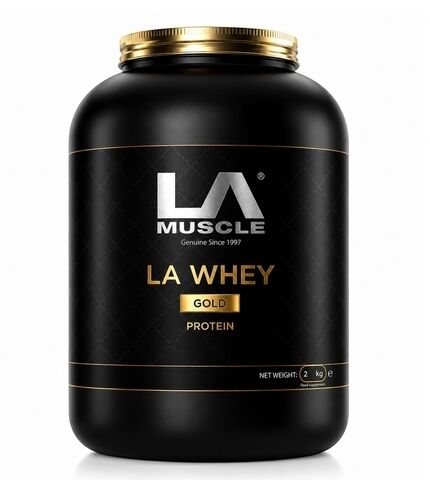
LA Whey Gold Protein
Voted "Best for Hard Gainers", Now with FREE Leaning agents, 50g per serving
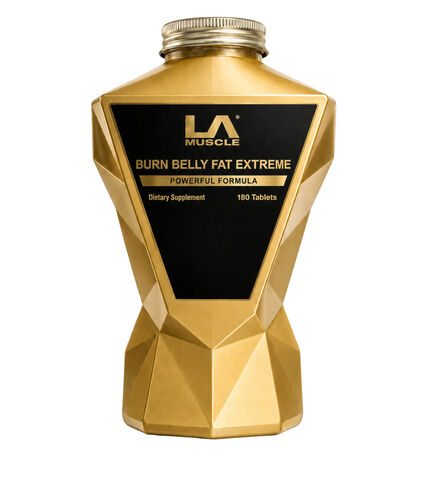
Burn Belly Fat EXTREME
Next level extreme belly fat burner