SIGN IN
 REGISTER


The Knowledge > How To Build Muscle >
Friday, 13th March 2026
How to Do Dumbbell Rows the Right Way (Complete Guide)
By LA Muscle on 13.03.2026 11:40 am


The dumbbell row is one of the best exercises for building a thick, powerful back. It targets the muscles responsible for strength, posture, and pulling power, and it is widely used by bodybuilders, athletes, and anyone serious about muscle development. When performed correctly, dumbbell rows can rapidly increase back thickness, strength, and overall upper-body power.
What Dumbbell Rows Build
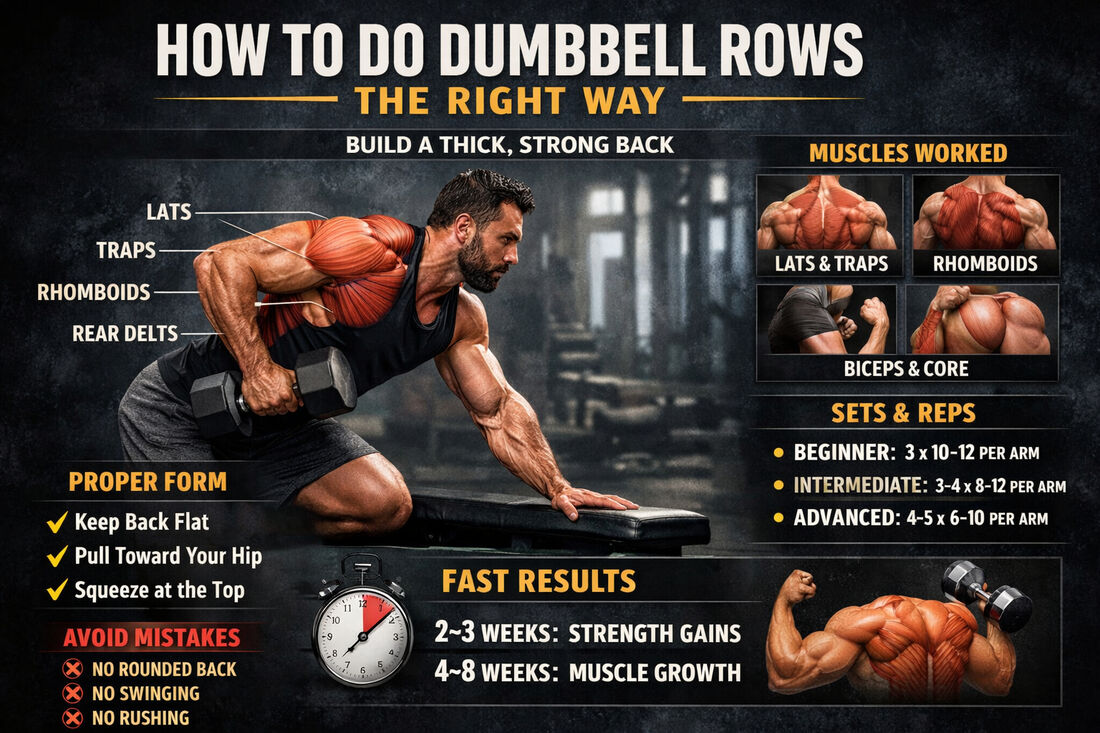
Dumbbell rows primarily develop the upper and mid-back, but they also involve several supporting muscles. Primary muscles worked
-
Latissimus dorsi (lats) – gives your back width and the V-taper shape
-
Rhomboids – creates mid-back thickness
-
Trapezius – builds upper back strength
-
Rear deltoids – stabilises the shoulder
Secondary muscles involved
-
Biceps
-
Forearms
-
Core muscles
-
Lower back stabilisers
Because it works multiple muscles together, the dumbbell row is a compound pulling exercise, which means it stimulates more muscle growth than isolation movements.
How to Do Dumbbell Rows Properly
Step-by-step technique
-
Set your position
Place one knee and one hand on a flat bench. Your other foot stays planted on the floor. Keep your back straight and flat, not rounded. -
Hold the dumbbell
Grab the dumbbell with your free hand and allow it to hang straight down from your shoulder. -
Pull the weight
Pull the dumbbell upward toward your hip, not your chest. This ensures the lats are doing the work rather than just the arms. -
Squeeze your back
At the top of the movement, squeeze your shoulder blade toward your spine. Pause briefly to maximise muscle contraction. -
Lower slowly
Lower the dumbbell back down under control until your arm is fully extended. -
Repeat and switch sides
Complete your reps, then switch arms.
Common Mistakes to Avoid
Using too much weight
Many people swing the dumbbell with momentum. This reduces muscle activation and increases injury risk.
Rounding the back
Your back should remain straight and stable throughout the movement.
Pulling toward the chest
Pulling toward the chest activates more biceps. Pulling toward the hip targets the lats more effectively.
Rushing the reps
Controlled reps create more muscle tension and better growth.
Sets and Reps for Best Results
For muscle growth, strength, and back development, use the following ranges.
Beginner
3 sets of 10–12 reps per arm
Intermediate
3–4 sets of 8–12 reps per arm
Advanced
4–5 sets of 6–10 reps per arm with heavier weights
Rest 60–90 seconds between sets.
How Fast You Can Build Muscle
If you train consistently and progressively increase weight, most people start noticing improvements in back strength within 2–3 weeks. Visible muscle development usually occurs within 4–8 weeks depending on training intensity, nutrition, and recovery. Combining dumbbell rows with other back exercises like pull-ups, lat pulldowns, and deadlifts can accelerate results.
Tips to Get Maximum Results
Focus on pulling with your elbow rather than your hand. Keep your core tight to stabilise your body. Use a full range of motion for better muscle activation. Increase weight gradually as your strength improves. When performed correctly and consistently, dumbbell rows are one of the most effective exercises for building a strong, muscular back and improving overall upper-body power.






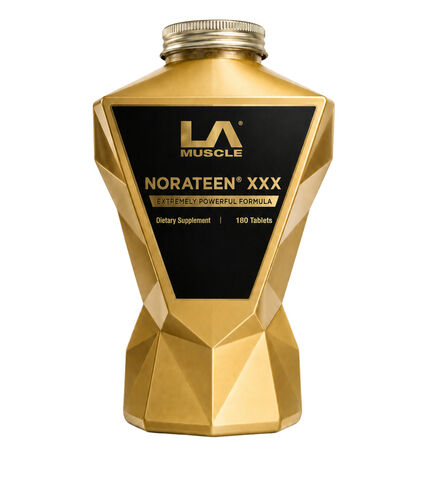
Norateen XXX
The strongest ever Norateen Muscle Builder - Period

Deflate
Flushes bloating, water retention and toxins overnight!