SIGN IN
 REGISTER


Tuesday, 14th July 2026
The Best and Worst Oils for Health
By LA Muscle on 14.07.2026 09:06 pm



Walk down any supermarket aisle and you'll find dozens of cooking oils claiming to be "healthy," "heart-friendly," or "natural." Yet not all oils are created equal. Some provide valuable nutrients and remain stable during cooking, while others can degrade with heat or contain an unfavourable balance of fats.
The key is understanding what makes an oil beneficial, how it behaves during cooking, and when it should be used. Choosing the right oil can support overall health, while relying on poorer-quality oils too often may work against your long-term wellbeing.
What Makes an Oil Healthy?
The healthiest oils generally have several characteristics:
- Rich in monounsaturated fats, which are associated with cardiovascular health.
- Contain natural antioxidants such as vitamin E and plant polyphenols.
- Have minimal processing.
- Remain reasonably stable when heated.
- Provide a balanced fatty acid profile.
Highly refined oils that have undergone extensive industrial processing may lose some naturally occurring nutrients, although refining can also improve heat stability.
The Best Oils for Everyday Health
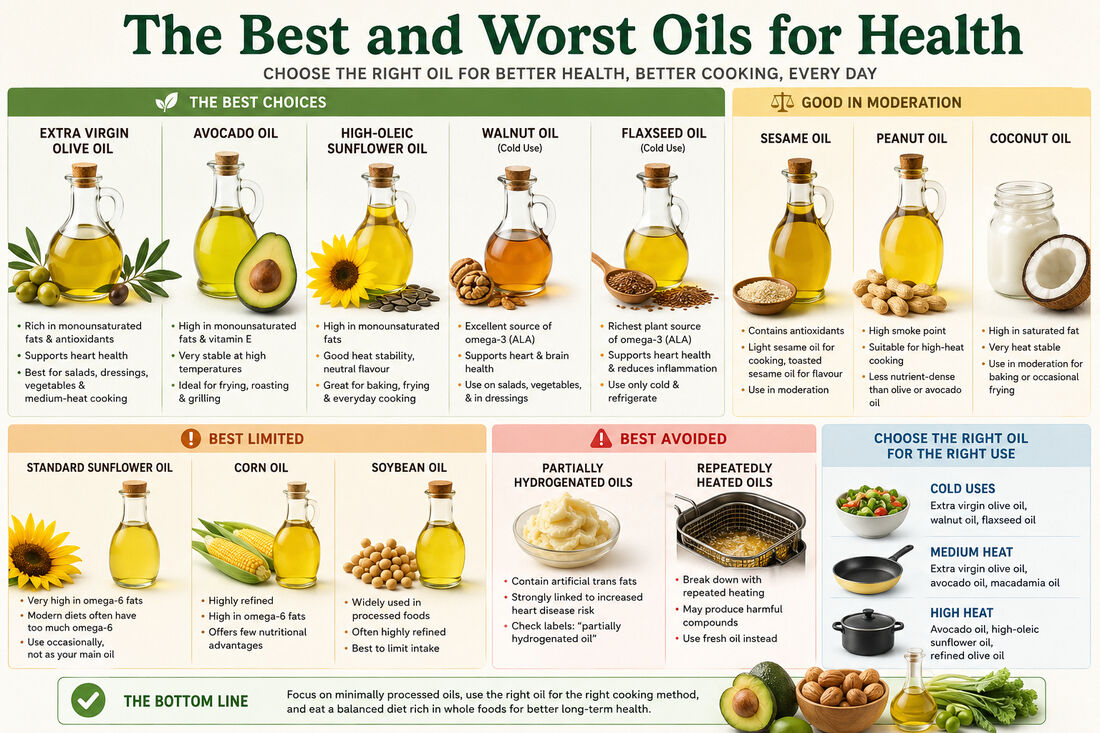
Extra Virgin Olive Oil
Often considered the gold standard of healthy oils, extra virgin olive oil has been a cornerstone of Mediterranean diets for centuries.
It is naturally rich in monounsaturated fats and contains powerful antioxidants and polyphenols that help protect the oil itself from oxidation.
Extra virgin olive oil is ideal for:
- Salads and dressings
- Vegetables
- Drizzling over cooked food
- Moderate-temperature cooking
Regular consumption has consistently been associated with good cardiovascular health as part of an overall healthy dietary pattern.
Avocado Oil
Avocado oil shares many similarities with olive oil but has an even higher smoke point, making it excellent for cooking.
Benefits include:
- High in monounsaturated fats
- Rich in vitamin E
- Stable at higher cooking temperatures
- Mild flavour suitable for many dishes
It works well for frying, roasting and grilling.
High-Oleic Sunflower Oil
Traditional sunflower oil contains large amounts of omega-6 fats, but high-oleic sunflower oil has been specially developed to contain significantly more monounsaturated fat.
Advantages include:
- Good heat stability
- Neutral flavour
- Suitable for baking and frying
- Longer shelf life
When buying sunflower oil, look specifically for "high oleic" on the label.
Macadamia Oil
Less commonly used but nutritionally impressive, macadamia oil contains one of the highest levels of monounsaturated fats of any cooking oil.
It offers:
- Excellent heat stability
- Mild buttery flavour
- Good choice for roasting and sautéing
Walnut Oil
Walnut oil is packed with omega-3 fats but should generally not be heated.
Instead, use it:
- On salads
- Over vegetables
- In cold sauces
- Mixed into dressings
Its delicate fats are easily damaged by cooking.
Flaxseed (Linseed) Oil
Flaxseed oil is one of the richest plant sources of alpha-linolenic acid (ALA), an omega-3 fatty acid.
Because it oxidises extremely easily, it should never be heated.
Use only:
- Cold
- Refrigerated
- In smoothies
- On salads
Oils That Are Good in Moderation
Sesame Oil
Sesame oil contains beneficial antioxidants called sesamol and sesamin.
Light sesame oil works for cooking, while toasted sesame oil is best used sparingly for flavour.
Peanut Oil
Peanut oil has a relatively high smoke point and is commonly used in Asian cooking.
It can be a reasonable choice for occasional high-heat cooking but is generally less nutrient-rich than olive or avocado oil.
Coconut Oil
Coconut oil remains controversial.
It contains mostly saturated fat, making it extremely heat stable. While some people include it in moderation, replacing unsaturated oils entirely with coconut oil is not generally recommended.
It can be useful for:
- Baking
- Occasional frying
- Certain recipes requiring solid fats
Moderation is key.
Oils Best Limited
Standard Sunflower Oil
Conventional sunflower oil contains very high levels of omega-6 fatty acids.
Omega-6 fats are essential nutrients, but modern diets often contain much more omega-6 than omega-3. Maintaining a balanced intake of both is generally considered beneficial.
Occasional use is unlikely to be a concern, but it should not necessarily be your primary cooking oil.
Corn Oil
Corn oil is highly refined and rich in omega-6 fats.
Although commonly used in commercial food production, it offers relatively few nutritional advantages compared with olive or avocado oil.
Soybean Oil
One of the world's most widely used vegetable oils, soybean oil is found in countless processed foods.
While it contains both omega-6 and some omega-3 fats, it is frequently highly refined and is often consumed in large amounts through ultra-processed foods rather than home cooking.
Oils Best Avoided When Possible
Partially Hydrogenated Oils
These oils contain artificial trans fats, which have been strongly linked with increased cardiovascular risk.
Many countries have restricted or banned their use, but they may still occasionally appear in imported or older packaged products.
Always check ingredient labels for:
- Partially hydrogenated vegetable oil
- Hydrogenated oil
Repeatedly Heated Oils
One of the biggest health concerns isn't necessarily the oil itself but how it is used.
When oil is repeatedly heated—such as in some deep fryers—it can break down, producing undesirable compounds and off-flavours.
Fresh oil used appropriately is generally preferable to oil that has been reheated multiple times.
Choosing the Right Oil for Cooking
Different oils suit different cooking methods.
Cold Uses
- Extra virgin olive oil
- Walnut oil
- Flaxseed oil
Medium Heat
- Extra virgin olive oil
- Avocado oil
- Macadamia oil
High Heat
- Avocado oil
- High-oleic sunflower oil
- Refined olive oil
Should You Avoid Seed Oils?
Seed oils have become the subject of intense debate online. The scientific picture is more nuanced than many headlines suggest.
Many seed oils can fit within a healthy diet, particularly when consumed in reasonable amounts and as part of minimally processed meals. However, diets very high in ultra-processed foods often provide excessive amounts of refined seed oils alongside sugar, salt and refined carbohydrates.
For most people, the focus should be less on fearing all seed oils and more on:
- Eating fewer ultra-processed foods.
- Cooking more meals at home.
- Choosing high-quality oils appropriate for the cooking method.
- Including a variety of healthy fat sources such as nuts, seeds, oily fish and avocados.
Practical Recommendations
If you were stocking a healthy kitchen, an excellent combination would be:
- Extra virgin olive oil for everyday use.
- Avocado oil for high-temperature cooking.
- Walnut or flaxseed oil for cold dishes.
- High-oleic sunflower oil as an occasional neutral cooking oil.
Limiting highly processed oils, avoiding repeatedly heated oils and eating a balanced diet rich in whole foods is likely to have a far greater impact on long-term health than focusing on any single oil alone.
No single oil is perfect for every purpose, but some are clearly better choices than others. Extra virgin olive oil remains one of the best all-round options thanks to its favourable fat profile, antioxidant content and versatility. Avocado oil is an excellent partner for higher-temperature cooking, while walnut and flaxseed oils are valuable additions for cold dishes.
Rather than chasing the latest dietary trend, focus on using minimally processed oils, matching the oil to the cooking method, and building your meals around vegetables, fruits, whole grains, legumes, nuts, seeds and quality sources of protein. When combined with an overall balanced diet, these simple choices can contribute to better long-term health and wellbeing.








Burn Belly Fat EXTREME
Next level extreme belly fat burner
LA Whey Gold Protein
Voted "Best for Hard Gainers", Now with FREE Leaning agents, 50g per serving